
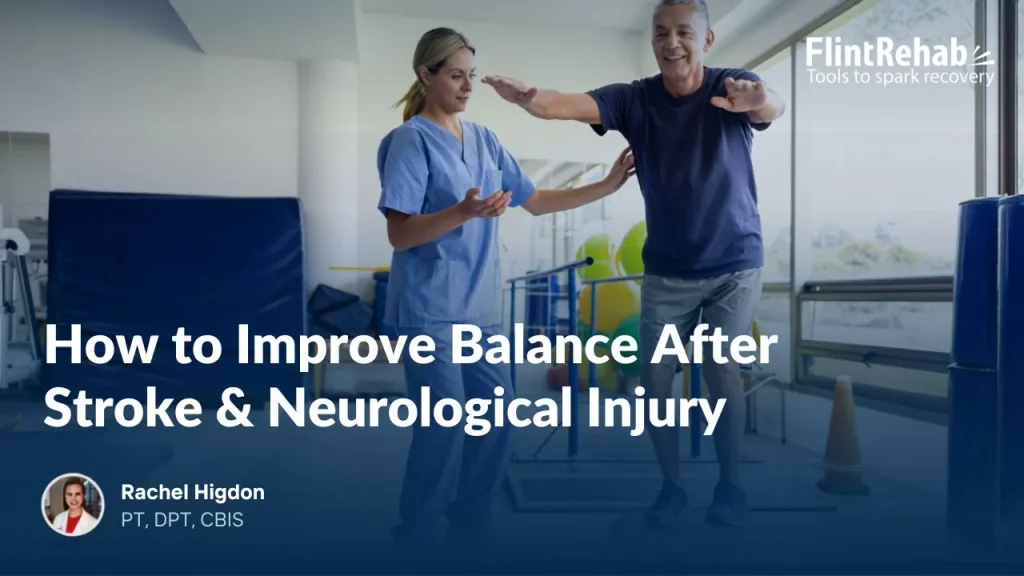

How to Improve Balance After Stroke and Neurological Injury
Understand what’s affecting your balance and learn practical ways to work toward greater stability, confidence, and independence.
Rachel is a neuro physical therapist and certified brain injury specialist on the Flint Rehab clinical team. She works with survivors on building home routines that hold up long after formal therapy has stopped.
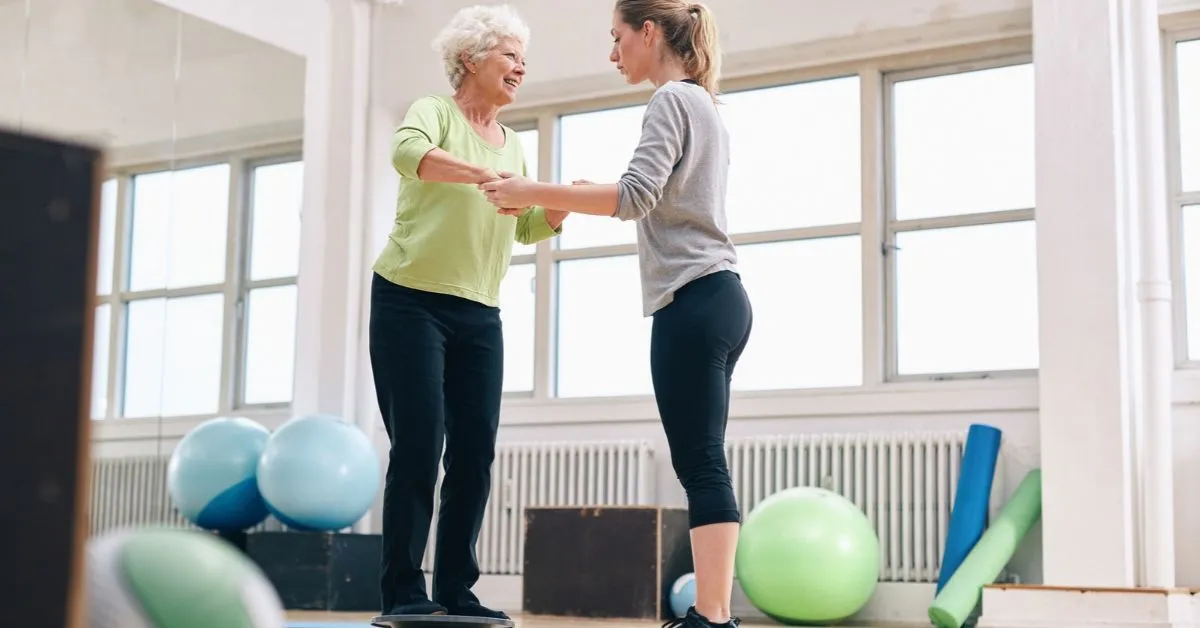
Balance is more than being steady.
Balance problems can make everyday activities feel uncertain from standing up and walking across a room to stepping outside, using stairs, or moving through a crowded space.
But balance is more than simply being steady. It depends on your strength, coordination, sensation, vision, vestibular system, and your brain’s ability to process all of that information together.
Join Rachel Higdon, PT, a neuro physical therapist, for a free educational webinar explaining why balance can become difficult after stroke and other neurological injuries, what recovery can look like, and the strategies that may help you continue improving.
What you'll learn
Who this session is for
This session is a must watch for survivors who are looking to improve their balance and coordination after a stroke or neurological injury as well as cargeivers looking to help a loved one with their recovery.
Keep Watching
View More Recovery Webinars
Ataxia: regaining coordination and balance
Why movement becomes unsteady after neurological injury, and the graded exercises that help you trust your body again.
Managing spasticity at home
What causes muscles to tighten, how stretching and movement fit together, and when to talk to your doctor.
Hemiplegia: working with a weaker side
Practical approaches to one-sided weakness — how to keep using the affected side without giving up on it.