
Weakness After Stroke: Why It Happens and How to Continue Recovery At Home
Rachel is a neuro physical therapist and certified brain injury specialist on the Flint Rehab clinical team. She works with survivors on building home routines that hold up long after formal therapy has stopped.
Told to keep exercising, but never told why.
Many stroke survivors are told to “keep exercising,” but few are ever taught why weakness happens after a stroke or what the brain actually needs to rebuild movement.
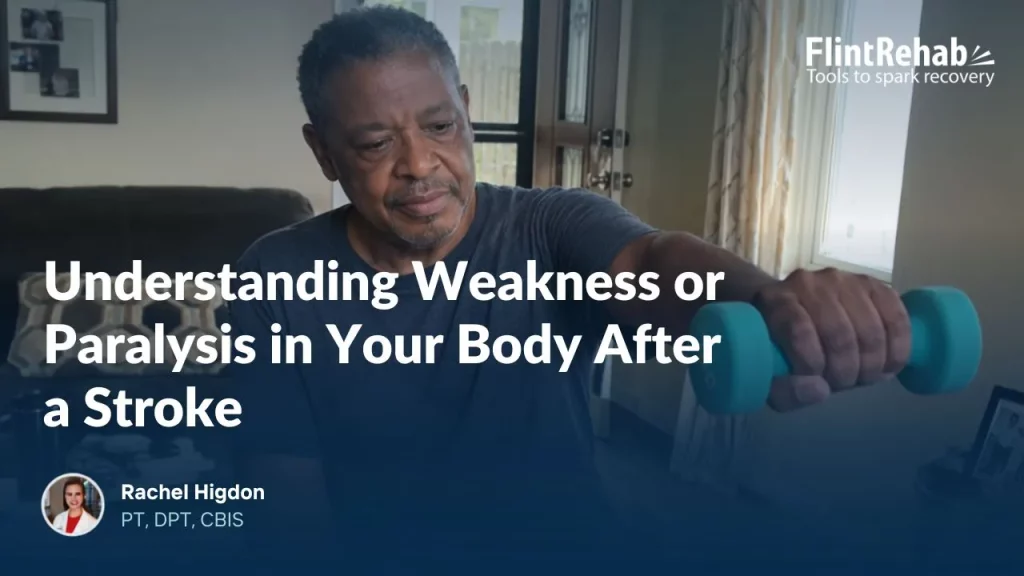
In this free educational webinar, neurological physical therapist Rachel Higdon, PT, explains what causes weakness, paralysis, and slow movement after stroke in a way that’s easy to understand. More importantly, she shares evidence-based techniques you can begin using at home to support recovery.
What you'll learn
Who this session is for
This session is a must watch for survivors and caregivers alike because whether your stroke happened weeks ago or years ago, understanding how the brain relearns movement can help you make better decisions about your rehabilitation.
Keep Watching
View More Recovery Webinars
Ataxia: regaining coordination and balance
Why movement becomes unsteady after neurological injury, and the graded exercises that help you trust your body again.
Managing spasticity at home
What causes muscles to tighten, how stretching and movement fit together, and when to talk to your doctor.
Hemiplegia: working with a weaker side
Practical approaches to one-sided weakness — how to keep using the affected side without giving up on it.
