
Stroke recovery often feels like a slow climb, especially when weakness or paralysis affects one side of the body. Many survivors wonder how they can rebuild strength in an arm or leg that barely moves. Therapists have long used targeted exercises, mobility work, and tools that support neuroplasticity. But there is another approach that may surprise people: training the stronger side to help the weaker side improve.
This is called the cross-education effect, and it gives survivors another way to make progress when movement on the affected side is limited. Research supports it, therapists are using it more often, and survivors can incorporate it into home rehab programs with the right guidance.
This article explains what the cross-education effect is, why it works, what the research shows, and how survivors can use it safely as part of their recovery plan.
What Is the Cross-Education Effect?
The cross-education effect describes a phenomenon where strength training on one side of the body leads to strength gains on the opposite, untrained side. For example, strengthening the right arm can help the left arm become stronger, even if the left arm is not actively moving.
Scientists first observed this concept more than a century ago in 1894, but it wasn’t widely applied in stroke rehab until more recent years, as research on neuroplasticity expanded. Today, therapists use it to help survivors who have limited mobility in one limb or who are just beginning to regain movement.
The basic idea is simple:
Training on the stronger side sends signals through the brain and spinal cord that help the weaker side adapt and improve.
Even when the affected side cannot complete high-intensity exercise, the brain is still learning from the work happening on the unaffected limb.
Why the Cross-Education Effect Matters for Stroke Survivors
For many survivors, early rehab is challenging. Weakness, stiffness, or limited control can make exercise on the affected side difficult or uncomfortable. The cross-education effect helps fill that gap.
Here are a few reasons it matters:
It creates a path forward even when the affected limb has minimal movement
If the weaker limb cannot lift, grasp, or bear weight yet, survivors can begin by training the stronger side. Progress does not have to wait.
It supports neuroplasticity
The brain learns from repeated effort. Training on the stronger side sends signals that help the nervous system reorganize, which supports eventual movement on the weaker side.
It helps prevent further strength loss
After a stroke, the affected limb can lose strength quickly. Cross-education training helps slow this process and may even reverse some of it.
It helps survivors stay engaged and active
Rehab can feel discouraging when movement is limited. Working the stronger side gives people a sense of momentum and motivates them to keep practicing.
How the Cross-Education Effect Works in the Brain
To understand why training one limb helps the other, it helps to take a closer look at how the brain organizes movement.
The right side of the brain controls movement on the left side of the body. Similarly, the left side of the brain controls movement on the right side of the body.. However, these two sides are not entirely separate. They communicate constantly through a structure called the corpus callosum, which allows both hemispheres to share information.
During strength training on one side:
- Motor regions become more active, reinforcing the pathways that control movement.
- Activity spreads across both hemispheres, not only the side responsible for the moving limb.
- Connections strengthen through neuroplasticity, helping the brain reorganize and recruit new areas for control.
- The nervous system adapts, improving the ability to send signals to the weaker limb.
Over time, this leads to measurable improvements on the side that wasn’t directly trained.
What the Research Says About Cross-Education and Stroke
Several studies have found clear benefits for stroke survivors who use unilateral strength training (training one side) as part of their rehab program.
Here are a few key findings:
Studies show strength gains in the weaker limb
Research demonstrates that training the stronger limb can significantly improve strength on the weaker side, with some studies reporting strength improvements of 29 to 42 percent. This is especially useful early in rehab.
Improvements extend beyond strength
Some studies note better coordination, faster reaction time, and improved motor functions, even without direct training on the affected limb. Others report improved mental health outcomes, notably reduced depression symptoms.
Neurological changes support functional recovery
Brain imaging studies show increased activity in motor regions on both sides of the brain after unilateral training. These changes support the return of functional movement.
Effective across different parts of the body
The cross-education effect has been documented in arms, legs, and even the ankle. This makes it flexible for survivors with different types of impairments.
Works well alongside traditional rehab
The best outcomes occur when cross-education is paired with:
- task-specific training
- functional practice
- high-repetition movement exercises
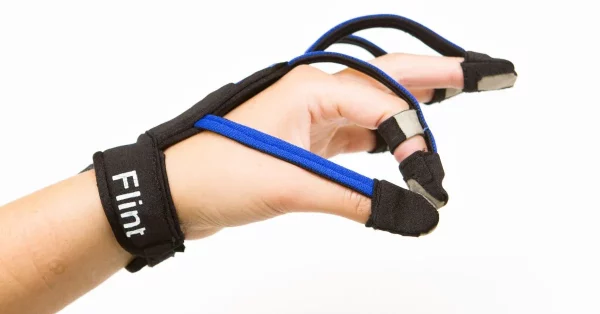
- devices that reinforce neuroplasticity
Cross-education is not a replacement for targeted exercises on the affected side. But for survivors with significant weakness, it provides a pathway toward early gains.
How Cross-Education Works With Neuroplasticity
Neuroplasticity is the brain’s ability to reorganize and form new connections. It supports nearly every aspect of stroke recovery, from regaining movement to improving coordination.
The cross-education effect reinforces neuroplasticity in several important ways:
More activation in motor areas
Training the stronger side stimulates parts of the brain that influence the weaker limb.
Recruitment of new neural pathways
If the original pathway is damaged by stroke, training on the stronger side encourages the brain to reroute signals.
Improved communication between hemispheres
The two sides of the brain coordinate movement, and unilateral training strengthens this communication.
Increased readiness for movement
Even before the weaker limb starts to regain strength, the nervous system becomes more responsive.
When survivors combine cross-education with targeted practice on the weaker side, neuroplasticity has more opportunities to build and strengthen new pathways.
Who Can Benefit Most From Cross-Education Training?
Most stroke survivors can use the cross-education effect to support their recovery, but certain groups may see the greatest benefit:
Survivors with severe weakness or limited movement
If the affected limb cannot perform enough repetitions to build strength, cross-education gives the brain the input it needs to begin making adaptive changes.
Survivors early in recovery
During the first few months, the brain is especially adaptive. Training the stronger side can support early neurological changes.
Survivors with fatigue or endurance challenges
Working only one side reduces energy demands while still promoting progress.
Survivors who feel stuck or plateaued
When progress slows, cross-education gives therapists another tool to stimulate new neurological pathways.
How Cross-Education Fits Into a Home Rehab Program for Stroke Recovery
Many survivors want to continue practicing at home. Cross-education makes that more achievable, especially when paired with tools that support high repetition and functional movement.
A well-rounded home program might include:
- strength exercises for the stronger limb
- mobility practice for the affected limb
- functional tasks using both hands or legs when possible
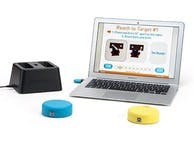
- high-rep tools like FitMi to promote neuroplasticity
- mental practice and visualization
- a daily or weekly progression plan
These elements give survivors multiple ways to activate the brain and encourage recovery.
Safety Considerations and Common Mistakes
Cross-education training is generally safe, but there are a few points to keep in mind:
Avoid overworking the stronger side
It may be tempting to rely heavily on the unaffected limb, but overuse can lead to strain or discomfort. Moderation and proper form matter.
Keep exercises controlled
Fast or jerky movements do not benefit the weaker limb. Slow, intentional movement supports the best neural adaptations.
Pair unilateral training with bilateral practice when possible
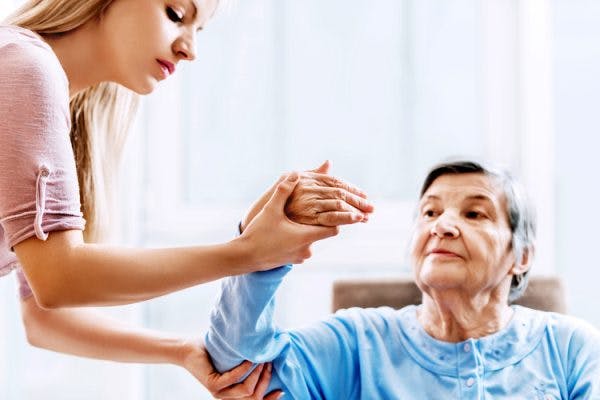
Training your stronger side doesn’t mean forgetting about the affected side. While focusing on cross education, it is important to continue moving the affected limb, even if it is only moved passively at first.
Follow therapist guidance
Each survivor’s medical history and stroke severity are unique. A therapist can tailor the program to match safety needs and goals.
What to Expect Over Time
The cross-education effect does not replace traditional rehab, but it can help survivors make meaningful progress. Over time, many people notice:
- better strength on the affected side
- improved control or coordination
- increased confidence during movement
- greater readiness for functional tasks
- more responsiveness during task-specific training
These gains build the foundation for continued progress.
The key is consistency. Training the stronger limb several times a week offers the best chance to harness this neurological effect.
Final Thoughts
The cross-education effect is a powerful addition to stroke rehab. It provides survivors with a practical way to build strength on the weaker side, even when movement is limited. By training the stronger limb and taking advantage of the brain’s natural ability to adapt, survivors can make meaningful progress and support long-term recovery.
While it works best alongside targeted therapy, neuroplasticity exercises, and functional movement practice, it offers hope and momentum during challenging stages of rehab. With consistency and the right approach, survivors can use the cross-education effect to strengthen both sides of the body and move closer to their recovery goals.