
Caring for a loved one after a stroke, brain injury, spinal cord injury, or a condition like MS or cerebral palsy can be one of the loneliest jobs there is.
You’re managing appointments, medications, and daily care. Often you get little guidance and even less time to process how you feel.
That loneliness is common, and it’s real. Many family caregivers feel isolated at least once a week. According to a 2025 research article looking at over 2,000 caregivers, approximately 12% of caregivers experienced social isolation, while 27% reported feelings of loneliness.
Left unaddressed, that isolation feeds burnout and burnout eats into the energy you have left for the person you’re caring for.
The good news is that, while a caregiver support group won’t fix everything, it can make the load easier to carry.
In this article, we’ll cover why support groups help, where to find one for your specific situation, what the first meeting is really like, and how to tell if a group is the right fit for you.
Why Caregiver Support Groups Actually Help
It’s easy to assume a support group is just a place to vent but it’s more than that. A 2024 study in Frontiers in Psychology found that social support softens how hard caregiving actually feels day to day.
Feeling supported doesn’t erase the workload but it does change how heavy that workload feels.
That effect shows up across conditions, not just stroke. Research focused on the caregiver’s quality of life found that support, whether through education, peer connection, or emotional support, eases caregiver stress and helps people cope better than going without it.
Similar research on caregivers for people with traumatic brain injury found that support also lowers depression, anxiety, and perceived burden for the caregiver. Those gains go beyond what clinical care for the survivor alone can offer.
The Golden Rule of Caregiver Support: you can’t pour from an empty cup. A support group is one of the few places built specifically to refill yours. It’s not a luxury or an extra. It’s part of what makes caregiving sustainable.
Where to Look for a Caregiver Support Group
Support groups exist in more places than most caregivers realize. Here’s where to start looking.
In-person groups
In-person groups tend to be easiest to find through people and places already connected to your loved one’s care:
- Ask the rehab team. Hospital social workers and rehab therapists often know about local groups and can make a direct referral.
- Call your local Area Agency on Aging. These agencies maintain lists of caregiver resources by county, even for caregivers of younger survivors.
- Check condition-specific organizations. The American Stroke Association, Brain Injury Association of America, and National Multiple Sclerosis Society all run local chapters that host caregiver groups.
- Ask at community and faith centers. Hospitals, senior centers, and houses of worship frequently host caregiver groups even when they aren’t widely advertised online.
Online and virtual groups
If getting out of the house is hard, online groups open up a lot more options. These groups can be particularly helpful for individuals who don’t have any local groups available for their specific situation. Facebook groups, condition-specific forums, and live video meetings hosted by national organizations all count.
For example, Flint Rehab hosts its own online stroke support community on Facebook, and many caregivers find a private online group feels more comfortable than a room full of strangers.
Virtual groups also solve a real logistical problem. It’s hard to leave a loved one alone just to attend a meeting. A 2026 pilot study on virtual stroke caregiver support groups found caregivers valued joining from home between caregiving tasks, without needing to arrange coverage first.
Condition-specific groups
A general caregiver group can help, but a group built around your loved one’s specific condition often gets to the practical stuff faster. Someone caring for a spouse with quadriplegia after a spinal cord injury has a very different daily routine than someone caring for a parent recovering from a brain injury.
If your first group doesn’t feel specific enough, keep looking. That’s not a reason to give up on groups altogether.
Support groups generally fall into two types. Some are condition-specific, built for caregivers of people with one diagnosis. Others are general caregiver groups, open to anyone in a caregiving role. Both have real value, but the right starting point depends on what you’re looking for.
Let’s take a look at a few options for various conditions we work with.
If you’re caring for a stroke survivor
The American Stroke Association runs a Stroke Support Group Finder. You can search by zip code for local groups, and many are specifically for caregivers rather than survivors.
As mentioned previously, here at Flint Rehab we have an online support group available, we also have a detailed guide to finding a stroke support group near you or online, including how to tell if a group is still active before you show up.
If you’re caring for someone with a brain injury
The Brain Injury Association of America keeps a state-by-state directory of local chapters that have virtual support groups. You can reach them directly at 800-444-6443 for help finding an in-person group.
Several national virtual groups, including ones just for caregivers, also meet regularly online if nothing local fits your schedule.
If you’re caring for someone with a spinal cord injury, MS, or cerebral palsy
The National MS Society runs virtual support groups, including multiple groups related to caregiving. Some of these groups are designed for caregivers only, while some are for individuals with MS and their families and/or friends. They can be contacted directly at 800-344-4867 for more assistance finding a group to fit your needs.
For spinal cord injury, many rehab hospitals and regional SCI centers host caregiver groups. Connecting with others who understand the emotional toll of a spinal cord injury can be just as valuable as any practical tip you’ll pick up. The United Spinal Association also has a list of support groups, including some that may be beneficial for caregivers.
Cerebral palsy caregiver groups tend to be smaller and more local, so a children’s hospital, rehab center, or CP-focused nonprofit is often a better starting point than a national search.
If you want a general caregiver group
Not every caregiver wants a room full of people managing the exact same diagnosis, and that’s a fair preference. The Family Caregiver Alliance (800-445-8106) and your local Area Agency on Aging, which can be found by searching here, both keep listings of general caregiver support groups.
These welcome anyone in a caregiving role, no matter the condition involved.
Online or In-Person: Which One Fits Your Life
Neither format is better than the other. It depends on what’s realistic for your schedule and what you need most right now.
Online groups tend to work well if you can’t easily leave your loved one alone, or if there’s no local group for your situation. They’re also a good fit if you want support outside of a fixed weekly time slot.
They make it easier to connect with caregivers facing similar situations, even if none of them live nearby.
In-person groups offer something a screen can’t fully replace: being physically present with people who understand what you’re carrying. For some caregivers, that face-to-face connection builds trust faster and feels more grounding.
If you’re not sure which you’d prefer, there’s no rule against trying both. Many caregivers use an online group for flexibility, plus an occasional in-person meeting for the deeper connection.
What to Expect at Your First Meeting
Walking into a support group for the first time is nerve-wracking, whether it’s a hospital conference room or a video call. Knowing the general shape of the meeting ahead of time can ease some of that pressure.
Most first meetings follow a predictable pattern:
Introductions and logistics. The facilitator covers housekeeping items, like how often the group meets, confidentiality rules, and any ground rules the group has agreed on.
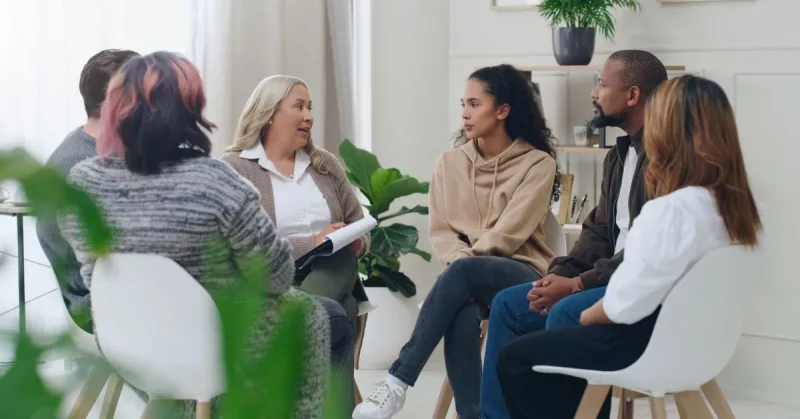
A round of check-ins. You’ll usually be invited, not required, to share a little about your caregiving situation. It’s completely normal to just listen during your first visit.
Peer sharing. Members take turns talking through what’s going on for them. Others respond with encouragement, practical tips, or their own similar experience.
Resource sharing. Someone will often mention a strategy, a piece of equipment, or a local service that helped them. This is often where the most practical takeaways come from.
You do not have to share anything you’re not ready to share. Most facilitators will tell you this directly. Groups are used to having quiet members who observe for a few sessions before opening up.
Give it more than one visit before deciding whether it’s a fit. Trust with a new group takes time to build, and a first meeting rarely reflects what the group is really like.
How to Tell If a Caregiver Support Group Is the Right Fit
Not every group will feel right, and that’s worth paying attention to instead of pushing through. A support group should leave you feeling a little lighter, not more drained than when you arrived.
A few signs a group is working for you:
- You leave with at least one thing that felt useful, whether that’s a strategy, a resource, or just feeling understood.
- The group feels judgment-free, even when members disagree or have different caregiving situations.
- You find yourself wanting to go back, even on weeks when you’re tired.
If a group consistently feels negative, focused only on complaints with no forward movement, or just doesn’t match your personality, it’s fine to try a different one.
There are many different formats, condition-specific options, and online alternatives out there. Finding the right fit is usually a matter of trying a second or third group, not giving up on the idea altogether.
Moving Forward
Finding the right caregiver support group might take some trial and error. That’s a normal part of the process, not a sign you’re doing something wrong. What matters most is that you don’t have to carry this role alone.
Whether you find your people in a hospital conference room, a Facebook group, or a Tuesday night video call, having even one space where someone truly gets it can make this role feel more sustainable.
We hope you enjoyed this article and subscribe to our newsletter for weekly articles just like this delivered straight to your inbox — subscribe here.
Here are some additional articles you might be interested in:
- How to Prevent and Overcome Caregiver Burnout: Recommended Resources and Strategies
- How to Find the Right Stroke Support Group Near You or Online
- How to Care for a Stroke Patient at Home: 10 Essential Tips for Caregivers
- How to Help Someone Who Had a Stroke: A Guide for Caregivers and Family Members
- 7 Strategies to Deal with the Emotional Effects of Spinal Cord Injury