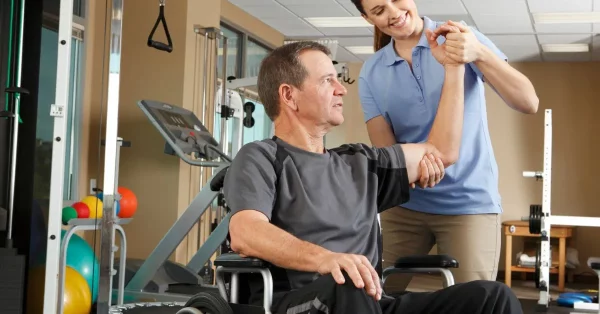
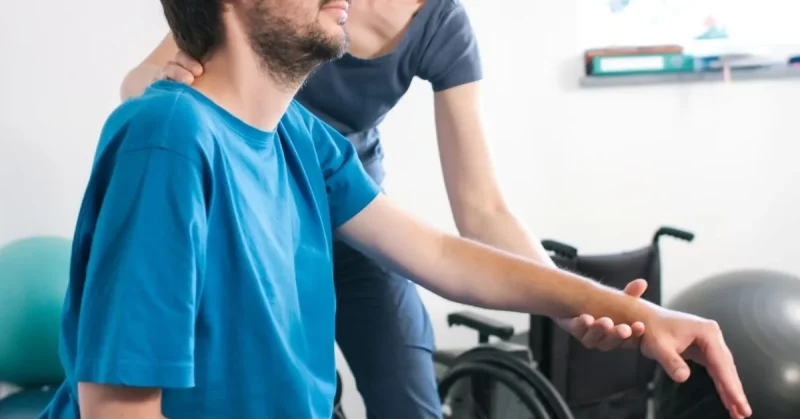

Living with a C5 spinal cord injury brings unique physical challenges, especially when it comes to arm, hand, and trunk control. While shoulder and elbow movement are often preserved to some degree, hand and finger function is usually limited. This can make daily tasks feel exhausting and slow, and it can also make rehabilitation feel overwhelming.
The good news is that meaningful progress does not depend on expensive clinics or complex machines. Many effective rehabilitation tools are simple, affordable, and easy to use at home. When used consistently, these tools can support strength, mobility, coordination, and motivation, all of which are essential for long term recovery and independence.
This guide walks through eight simple home rehab tools that are commonly used by people with C5 spinal cord injuries. Each section explains what the tool is, how it can help, and why it may be worth including in a daily routine. These tools are not about quick fixes. They are about building habits, encouraging movement, and creating small wins that add up over time.
Understanding Rehab Needs After a C5 Spinal Cord Injury
Before diving into specific tools, it helps to understand the general rehabilitation goals after a C5 injury. While every injury is different, many people at this level experience similar patterns of strength and limitation.
Common Physical Abilities at the C5 Level
In general, individuals with a C5 spinal cord injury will still have some:
- Shoulder movement such as lifting the arm forward and to the side
- Elbow flexion, meaning the ability to bend the elbow
- Limited wrist or hand movement, often requiring adaptive support
Because hand and finger function is reduced or absent, many rehab tools focus on gross motor movements, assisted exercise, or creative ways to engage muscles without relying too much on fine motor control.
Why Home Rehab Tools Matter After a C5 Spinal Cord Injury
Formal therapy sessions are important, but they are rarely enough on their own. Recovery depends on repetition and consistency. Home rehab tools make it easier to practice movements daily without waiting for appointments or transportation.
While consistent practice is important for all SCI survivors, individuals with incomplete spinal cord injuries may see the most benefit in terms of regaining movement and/or sensation below the level of injury. Since some neural connections at the level of injury are spared in incomplete SCIs, there is often a greater capacity for recovery.
This is because the brain and spinal cord have the amazing ability to adaptively rewire themselves through a process known as neuroplasticity. This process is optimized through repetitive practice. Therefore, regularly performing rehab exercises, both at home and during therapy sessions, can enhance neuroplasticity and encourage functional improvements.
Simple tools can also help shift rehab from something that feels clinical to something that fits naturally into daily life. When tools are easy to access and use, people are more likely to stick with them.
1. Therapy Putty or Adaptive Resistance Putty
Therapy putty is a soft, moldable material that provides gentle resistance during movement. It comes in different firmness levels, making it adaptable to many strength levels.
How It Helps After a C5 Injury
For someone with a C5 injury, therapy putty can be used for:
- Assisted hand movements with the help of a caregiver
- Wrist and forearm engagement if some movement is present
- Sensory input, which is important even when active movement is limited
While therapy putty may be most beneficial for those with incomplete injuries, even squeezing or pressing into putty with the palm can stimulate muscles and provide valuable sensory feedback.
Why It Works at Home
Therapy putty is inexpensive, portable, and easy to store. It does not require setup or power, and sessions can be as short or long as needed. Many people keep it nearby to use during quiet moments like watching television or listening to music.
Over time, repeated exposure to resistance can support muscle activation and awareness, even if progress feels slow at first.
2. Arm Skate or Low Friction Arm Support
An arm skate is a simple platform that allows the forearm to glide smoothly across a table or surface. Some versions include wheels, while others rely on smooth materials to reduce friction.
How It Supports Upper Limb Movement
After a C5 spinal cord injury, lifting the arm against gravity can be difficult and fatiguing. An arm skate reduces the weight burden so the shoulder and elbow can move more freely.
This tool helps with:
- Practicing reaching movements
- Improving shoulder control
- Reducing stiffness from limited use
The arm skate is a great tool as it allows people to focus on movement patterns rather than fighting gravity.
Making It Part of a Routine
Arm skates work well during short, frequent sessions. A few minutes of guided movement several times a day can be more effective than one long session.
Many therapists recommend pairing arm skate exercises with visual targets, such as sliding the arm toward an object on the table. This adds purpose and keeps the exercise engaging.
3. Resistance Bands With Adaptive Grips
Resistance bands are a staple in rehabilitation because they provide adjustable resistance without heavy weights. For individuals with limited hand function, adaptive grips or cuffs can make bands accessible.
Benefits for a C5 Spinal Cord Injury
Resistance bands can support:
- Shoulder strengthening
- Elbow flexion exercises
- Assisted range of motion
With adaptive straps, bands can be secured to the forearm rather than the hand. This allows people to work muscles that are still innervated without requiring grip strength.
Why Simplicity Matters
Resistance bands take up very little space and can be used seated or in a wheelchair. They also allow for gradual progression by adjusting band tension or range of movement.
Because they are versatile, bands can be used for warm ups, strengthening, and stretching within the same session.
4. FitMi
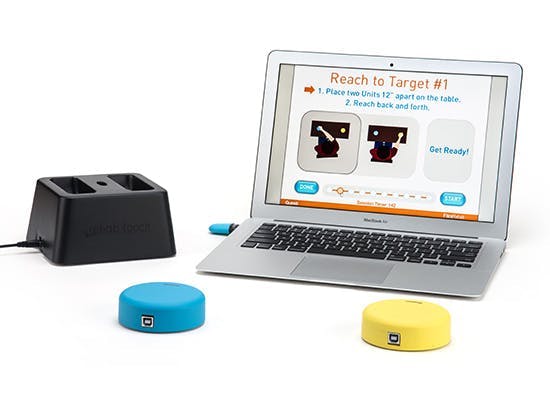
FitMi is an interactive home therapy system designed to encourage repetitive, active movement through guided exercises and real time feedback.
How FitMi Supports C5 Rehabilitation
FitMi includes two wireless pucks that register movement when they are tapped, squeezed, or moved. For people with a C5 injury, FitMi exercises can be adapted to focus on:
- Shoulder and elbow movement
- Gross motor arm exercises
- Assisted movements with caregiver support
The system provides structure and accountability, which can be especially helpful when motivation is low.
Why Engagement Is Important
One of the hardest parts of home rehab is staying consistent. FitMi uses visual and auditory feedback to make exercises feel more interactive rather than repetitive.
Many users report that having a program to follow helps reduce decision fatigue. Instead of wondering what to do each day, the system guides the session step by step. It even adapts to your current skill level, promoting consistent improvements without becoming too challenging.
5. MusicGlove
MusicGlove is a rehabilitation device that uses music based games to encourage hand and finger movement. While hand and finger function are limited after a C5 injury, the MusicGlove can still play a role in helping regain movement for those with incomplete injuries.
Adapting MusicGlove for C5 Injuries
In cases where partial hand movement or assisted finger motion is present, MusicGlove can be used with:
- Caregiver assisted finger placement
- Focus on rhythm and timing rather than force
- Sensory stimulation through touch and sound
Even when independent finger movement is minimal, the experience of music paired with movement can help reinforce neural pathways.
The Emotional Side of Music Based Therapy
Music has a powerful effect on mood and motivation. Rehab that includes music often feels less like exercise and more like an activity to look forward to.
For some people, MusicGlove becomes a bridge between therapy and emotional well being, especially during long recovery periods.
6. Finger and Wrist Exercisers
Finger and wrist exercisers are designed to promote active movement and gentle strengthening of the wrist and fingers. They typically use springs, elastic resistance, or adjustable tension to encourage repeated motion.
How It Helps After a C5 Injury
After a C5 spinal cord injury, wrist and finger movement is often limited or inconsistent. Finger and wrist exercisers can be used to:
- Encourage any available finger flexion or extension
- Support wrist activation when some movement is present
- Reinforce neuromuscular engagement through repetition
Even assisted movement with these tools can help stimulate the muscles and reinforce motor pathways, especially when paired with focused attention and mental visualization.
Why It Works at Home
These devices are small, lightweight, and easy to use in short sessions. Many people incorporate them into daily routines without needing special setup. Because resistance can often be adjusted, the same tool can remain useful as strength or control changes over time.
7. Therapeutic Exercise Balls
Therapeutic exercise balls are soft balls available in different sizes and resistance levels. They are commonly used for squeezing, pressing, or guided movement exercises.
How It Helps After a C5 Injury
Exercise balls can support rehabilitation by:
- Promoting wrist and forearm activation
- Providing tactile and sensory feedback
- Encouraging bilateral arm involvement with assistance
Even pressing the palm or forearm into the ball against a surface can stimulate muscle engagement and improve awareness of the limb.
Why It Works at Home
Exercise balls are simple, affordable, and versatile. They can be used seated, in a wheelchair, or at a table. Because they are forgiving and low impact, they are well suited for frequent practice without increasing strain or fatigue.
8. Cuff Weights
Cuff weights are wearable weights that can strap directly around the wrist or forearm, making it easy to strengthen the shoulder and elbow muscles even for those with little to no finger movement.
How It Helps After a C5 Injury
For individuals with limited strength, cuff weights can help by:
- Improving shoulder and elbow strength and mobility
- Providing proprioceptive sensory input
- Encouraging upper body exercise even when hand function is limited
Cuff weights are affordable and are easily adjustable in terms of size and weight, making them an excellent home rehab tool for C5 spinal cord injury survivors.
Why It Works at Home
While cuff weights can be used during specific exercises, they can also be worn during functional tasks throughout the day, allowing upper body strengthening to easily be integrated into daily routines. However, be sure to watch for any signs of irritation, particularly for those with wrist/forearm sensation deficits.
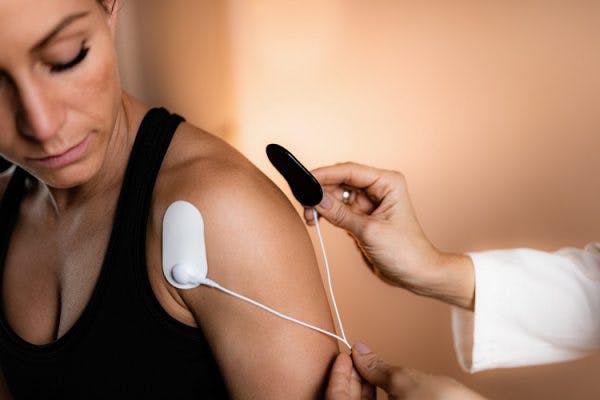
9. Neuromuscular Electrical Stimulation (NMES)
Neuromuscular electrical stimulation devices use mild electrical impulses to activate specific muscles. Portable home units are often used as part of guided rehabilitation programs.
How It Helps After a C5 Injury
NMES can support recovery by:
- Stimulating muscles with weak voluntary activation
- Reinforcing muscle contractions during exercise
- Improving circulation in underused muscles
When paired with active or assisted movement, electrical stimulation may help strengthen the connection between the brain and the muscles.
Why It Works at Home
Home NMES units allow for consistent use outside of therapy sessions. With proper guidance from a clinician, these devices can be safely incorporated into regular routines. Many people use NMES for short sessions that complement active rehab work.
Final Thoughts
A C5 spinal cord injury changes how the body moves, but it does not eliminate the potential for progress. Simple home rehab tools can support movement, maintain joint health, and create structure during recovery.
Tools like therapy putty, resistance bands, FitMi, and MusicGlove are not about doing everything at once. They are about finding a few options that fit your abilities and lifestyle.
Recovery is personal. What matters most is finding tools that encourage you to keep moving, stay engaged, and believe that effort today can support function tomorrow.
We hope you enjoyed this article and subscribe to our newsletter for weekly articles just like this delivered straight to your inbox — subscribe here.