
Recovering hand function after a stroke can be especially challenging when your career depends on precise hand movements. For artists, musicians, designers, and craftspeople, the hands are not just tools. They are essential to creativity, expression, and daily work.
For scenic artist Tresa Walker, a stroke created an unexpected obstacle in both her life and career. The left hand she relied on for painting and holding brushes suddenly felt disconnected and difficult to control.
However, through persistence and the help of MusicGlove, she began rebuilding the connection between her brain and hand. Let’s dive in and hear from Tresa about her recovery journey and how music-based hand therapy helped her stay motivated and engaged in rehabilitation.
When Stroke Interrupts a Hands-On Career
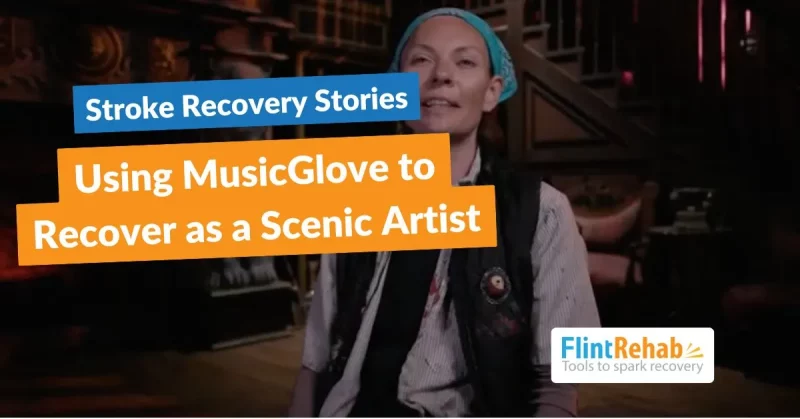
Tresa Walker works as a scenic artist for Zombie Army Productions, a role that requires constant use of her hands. Scenic artists paint, design, and build visual environments for film and production sets, which involves detailed brushwork and precise hand control.
Naturally, this kind of work requires excellent coordination in both hands.
As Tresa explains, much of her work involves holding brushes, stabilizing materials, and controlling fine movements.
However, after her stroke, using her left hand became much more difficult.
Tasks that once felt natural suddenly required enormous concentration. Her left hand felt stiff and uncooperative, making it harder to perform the movements she relied on every day.
The Frustration of Traditional Therapy
Like many stroke survivors, Tresa initially began traditional rehabilitation therapy to regain movement in her hand.
However, she eventually found it difficult to stay motivated.
“I stopped doing therapy. I lost interest. It was really hard.”
This experience is very common among stroke survivors. While therapy exercises are essential, they can sometimes feel repetitive or discouraging, especially when progress takes time.
Over time, Tresa began thinking more about the long-term effects of stroke and what the future might look like if she did not continue working on her recovery.
She realized she needed to find a way to reconnect her brain with the left side of her body.
Recognizing the Importance of Brain–Hand Connection
After a stroke, the communication between the brain and affected limbs can become disrupted. Movements that once happened automatically now require conscious effort.
For Tresa, the biggest challenge was reconnecting with her left hand.
She describes feeling as though her hand had become an appendage that did not quite cooperate with the rest of her body.
This feeling is something many stroke survivors experience. The brain must rebuild neural pathways to regain coordination, and that process requires consistent practice and repetition.
But finding the motivation to keep practicing can be difficult when exercises feel tedious.
Discovering MusicGlove
Tresa eventually discovered the MusicGlove, a rehabilitation device designed to help survivors practice hand movements through music-based rehab exercises.
The MusicGlove is worn like a glove and includes sensors on the fingertips. These sensors detect specific finger movements while users tap their fingers to match notes as they move across a screen in time with music.
Each finger movement is color-coded, which helps guide the exercises and makes them easier to follow.
Tresa quickly noticed that this type of therapy felt different from the exercises she had tried before.
Turning Therapy Into Something Enjoyable
One of the biggest differences Tresa noticed was how engaging the therapy felt. Rather than performing repetitive movements without feedback, MusicGlove turns hand therapy into an interactive activity with music and timing.
As notes appear on the screen, users tap the corresponding fingers in rhythm with the beat. The device provides feedback when movements are timed correctly.
For Tresa, this experience changed how she thought about therapy.
“The way it connects and the sound it makes when you hit the notes sends a signal to my brain that you’re making the time.”
Instead of focusing on frustration or difficulty, she began focusing on the rhythm and movement. This shift made therapy feel less like a chore and more like a challenge she wanted to improve at.
Rebuilding Coordination One Finger at a Time
MusicGlove encourages movements that are important for everyday hand function, such as:
- Pinching
- Grasping
- Tapping individual fingers
- Coordinating multiple fingers together
These exercises help strengthen the connection between the brain and hand through repetition. Each time the user performs a movement in time with the music, the brain receives feedback that helps reinforce that neural pathway.
For stroke survivors, this type of repetitive practice is essential for neuroplasticity, the brain’s ability to reorganize and rebuild connections after injury.
Over time, this practice can help restore coordination and control.
Seeing Her Hand in a New Way
Another important shift for Tresa was how the therapy helped her mentally reconnect with her hand. Before using MusicGlove, she often felt disconnected from her left hand.
But the interactive exercises helped her focus on it differently.
“It made me think about my hand instead of this appendage that’s attached to my body that I don’t play well with.”
Through repeated practice, she began noticing improvements in how her hand moved and responded. This mental shift can be incredibly powerful during recovery. When survivors feel more connected to the affected limb, they are often more motivated to continue practicing.
Why Music-Based Therapy Can Be So Motivating
One reason MusicGlove works well for many survivors is that it combines movement with music and feedback.
Music naturally engages the brain and can stimulate multiple areas involved in:
- Timing
- Coordination
- Sensory processing
- Motor control
When movements are paired with rhythm, the brain often responds more strongly than it does with simple repetition alone.
For many survivors, this makes therapy feel more engaging, rewarding, and motivating. Tresa noticed that the interactive design made her want to keep practicing.
“It makes you want to do it, as opposed to therapies that aren’t fun.”
Staying Consistent With Therapy
Consistency is one of the most important factors in stroke recovery. The brain rebuilds connections through repeated practice over time.
However, staying consistent is much easier when therapy feels enjoyable.
For Tresa, MusicGlove helped transform therapy from something she avoided into something she actively wanted to do. That motivation can make a big difference when it comes to long-term recovery.
Even small improvements gained through regular practice can add up to meaningful changes in hand function.
Encouragement for Stroke Survivors
Every stroke recovery journey is different. Some survivors regain function quickly, while others experience a slower path that requires patience and persistence.
Tresa’s experience highlights an important lesson: finding the right therapy tools can make a huge difference in motivation and consistency.
If traditional exercises feel discouraging, exploring new rehabilitation approaches may help keep recovery moving forward. Interactive tools like MusicGlove provide structured exercises while also making therapy feel more engaging.
And when therapy becomes something you actually want to do, staying consistent becomes much easier.
Learn More About MusicGlove
MusicGlove is a home rehabilitation device designed to help stroke and brain injury survivors improve hand coordination through music-based exercises.
By combining repetition, rhythm, and real-time feedback, MusicGlove helps encourage the type of practice that supports neurological recovery.
For survivors working to regain hand function, adding structured therapy at home may help strengthen the connection between the brain and hand over time.
Recovery does not happen overnight. But with consistent effort and the right support, progress is always possible.
Watch Tresa talk about her stroke recovery here: