
When you think of a stroke, you might picture someone with high blood pressure, high cholesterol, or diabetes. But stroke does not always follow the “typical” script.
Mary Phelan from Dublin, Ireland, knows that firsthand.
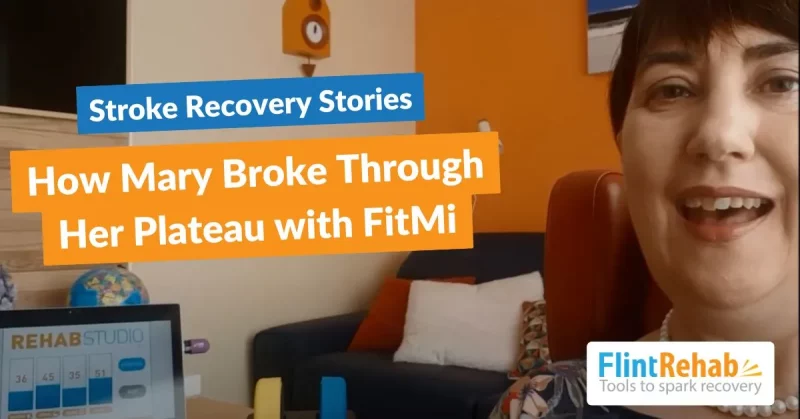
Her stroke came as a complete shock. She had none of the common risk factors. Yet in 2017, her life changed overnight. This is her story of surviving a stroke, navigating a long hospital stay, hitting the frustrating “stroke recovery plateau,” and finding motivation again through daily repetition.
A Stroke Without Warning
When Mary suffered her stroke, she was luckily already in the hospital.. Doctors were investigating an autoimmune condition called Hypereosinophilic Syndrome (HES), which is a rare disorder in which the body produces too many eosinophils (a type of white blood cell).
She didn’t have high cholesterol, high blood pressure, or diabetes. In fact, she had none of the typical stroke risk factors.
And then it happened.
Mary lost consciousness and remained unconscious for five weeks.
When she finally woke up, everything had changed.
Waking Up to Paralysis After Her Stroke
After regaining consciousness, Mary discovered she was paralyzed on her right side.
She could not move her:
- Right hand
- Right arm
- Right leg
This condition is known as hemiplegia, or paralysis affecting one side of the body. For many stroke survivors, especially after a severe stroke, weakness or paralysis on one side is one of the most common and life-altering effects.
But Mary’s journey did not stop there.
Complications and a Long Hospital Stay
In addition to the stroke, Mary experienced multiple organ failure which was unrelated to the stroke itself. However, as a result, she ended up spending five more months in the hospital.
Think about that for a moment.
Five weeks unconscious and five additional months hospitalized.
Stroke recovery is hard under the best circumstances. Add organ failure and prolonged bed rest, and the physical challenges multiply.
Eventually, Mary was transferred to a rehabilitation facility, where she underwent five weeks of intensive physiotherapy and occupational therapy.
This phase focused on:
- Relearning movement
- Strengthening weakened muscles
- Improving coordination
- Practicing daily activities
Making Strong Early Progress After Stroke
Like many stroke survivors, Mary made significant progress during structured rehabilitation.
The hospital environment provides:
- Consistent therapy schedules
- Hands-on professional support
- Built-in accountability
- A recovery-focused routine
And in those early months, progress can feel dramatic. Movements start returning. Strength improves. Daily tasks become possible again.
But then, something happens that many survivors know all too well.
The Stroke Recovery Plateau
About two years into her recovery, Mary hit what she calls “that famous plateau.”
If you’ve experienced it, you know the feeling.
Progress slows down, improvements feel smaller, and motivation becomes harder to maintain.
The stroke recovery plateau is not a true stopping point in the brain’s ability to heal. Instead, it is often a reflection of your body adjusting to the existing therapy routine.
Recovery after stroke depends heavily on neuroplasticity, the brain’s ability to rewire and form new connections. And neuroplasticity requires one critical ingredient:
Repetition.
Without consistent repetition, the brain has less reason to strengthen new pathways. So, with this Mary decided she needed something more.
Searching for Motivation Beyond Traditional Therapy
Two years post-stroke, Mary was no longer in the intensive rehab setting. Like many survivors, she was largely responsible for continuing her exercises at home.
That’s when she began looking for something to help her stay consistent.
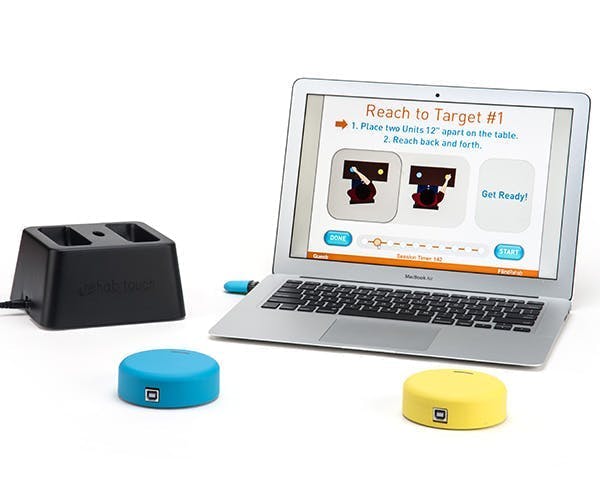
She came across the FitMi from Flint Rehab online and once it was available in the E.U. she decided to try it!
Mary describes the device as “absolutely excellent” for keeping her engaged in daily exercise.
Here’s why consistency matters so much:
- The brain strengthens pathways it uses frequently.
- High repetitions reinforce motor learning.
- Daily practice prevents regression.
- Structured feedback increases motivation.
One of the biggest challenges in long-term stroke recovery is not knowing what to do but actually doing it consistently.
Mary found that having a structured system made her more inclined to exercise every day. Instead of wondering whether she had done enough, she had a guided plan to follow.
And that made all the difference.
Why Repetition Is So Powerful in Stroke Recovery
After a stroke, damaged areas of the brain may no longer control certain movements. However, nearby areas can sometimes take over those functions through repeated activation.
This is neuroplasticity in action.
But neuroplasticity does not happen by accident.
It requires:
- High-volume repetition
- Task-specific practice
- Consistency over time
- Engagement and feedback
Many survivors plateau not because recovery is “over,” but because repetition and consistency drops significantly after formal therapy ends.
Mary’s story highlights something important: even two years after stroke, meaningful practice still matters and the brain remains capable of change.
Stroke Recovery After Two Years: Is It Too Late?
One of the most common questions we hear is: “Is it too late for me to improve?”
Mary’s journey answers that clearly: no.
While early intervention is critical, recovery does not follow a strict expiration date. Studies show that the brain retains the ability to adapt years after stroke.
However, improvement may require:
- More intentional practice
- Structured programs
- Daily commitment
- A focus on repetition
For survivors who feel stuck, sometimes the missing piece is not potential but rather consistency.
Mary’s Advice to Other Stroke Survivors
Mary now recommends structured home rehabilitation tools to other stroke survivors, even those who are years into their recovery.
Her message is simple:
- Do not assume that time alone determines your outcome.
- Do not assume progress must stop.
- Do not underestimate the power of daily repetition.
Even small movements, repeated consistently, can reinforce neural pathways. And perhaps most importantly, staying engaged in your recovery can restore a sense of control.
Final Thoughts
Stroke recovery is rarely linear. It includes setbacks, surprises, and stretches where improvement feels invisible. Yet Mary’s experience reminds us that recovery is also about resilience. It is about continuing to show up, even years later.
If you are on this journey, take one small step today. Repeat it tomorrow and then repeat it again because repetition builds progress. And progress, even slow progress, still counts.
Watch Mary’s full recovery story here: https://www.youtube.com/watch?v=xNffzYo-t5k