
Why are you still dealing with headaches, dizziness, or brain fog months after your concussion?
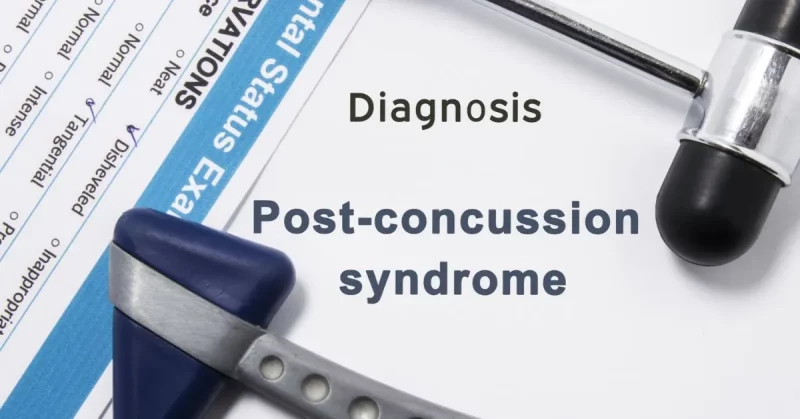
Most people feel better within two to four weeks but when symptoms hang on well past that, it has a name: post-concussion syndrome. It also has real, evidence-backed treatments, even when rest alone hasn’t worked.
Understanding why your symptoms are sticking around is the first step. From there, you can start matching your treatment to what’s actually going wrong.
Let’s dive in!
Why Some Concussions Don’t Follow the Usual Timeline
Most concussions resolve within a few weeks as the brain settles after the injury. But many studies show that between 10% and 15% of people still have symptoms three months out. Some studies estimate even higher percentages, with up to 58% of individuals experiencing long-lasting symptoms.
That’s when doctors start using the term post-concussion syndrome, also called persistent post-concussive symptoms.
Nobody fully knows why some people recover quickly and others don’t. It’s not about how “bad” the hit looked. Researchers point to a mix of factors instead. These include how the brain manages blood flow and pain signals. They also include whether the inner ear’s balance system took a hit. Anxiety or a history of migraines can play a role too. Persistent symptoms are often driven by more than one system at once.
That’s exactly why a single treatment rarely fixes everything.
This mix matters for you. It means the path forward usually isn’t “rest more” or “wait it out.” Instead, it means finding which specific systems are struggling. That could be your vestibular system, the inner-ear network that controls balance. It could be how your heart and lungs respond to exercise. It could be your sleep or your mood.
Each one needs its own treatment.
Why “Just Resting” Stops Helping After a Few Weeks
Complete rest makes sense for the first day or two after a concussion. Past that point, it can start working against you.
Rest beyond the first 24 to 48 hours hasn’t shown clear evidence that it helps long-term recovery. Staying inactive for weeks can even make symptoms last longer. Your brain and body recover through gradual, structured activity. Avoiding all activity works against you.
The Golden Rule of Post-Concussion Recovery: activity should be dosed, not avoided. The goal is finding the amount of movement and mental effort you can handle without spiking your symptoms, then slowly raising that ceiling over time.
Sub-Symptom Threshold Exercise: Retraining Your Tolerance for Activity
If exercise reliably brings your symptoms back, you’re not imagining it. After a concussion, the part of your nervous system that controls blood flow to the brain during exercise can get thrown off. Your brain reacts to exercise like it’s still under threat.
Sub-symptom threshold aerobic exercise is a structured way to retrain that system. A clinician tests you on a treadmill or bike. This finds the heart rate where your symptoms start to worsen. Then you exercise daily, several days a week, at an intensity just below that line. Over six to twelve weeks, that ceiling gradually rises.
This isn’t a guess. One randomized controlled trial found this kind of exercise raised patients’ symptom threshold at 12 weeks, and the gains held at 6 months. It works the same way most rehab works: repeated, controlled practice builds tolerance. Here, that practice is aimed at your blood flow response instead of a single muscle.
If you’ve been avoiding activity because it triggers symptoms, this is worth bringing to your doctor or a concussion-specialized physical therapist directly. Ask specifically about a Buffalo Concussion Treadmill Test to find your starting point.
Vestibular Therapy for Dizziness and Balance Problems
Dizziness, unsteadiness, or blurry vision when you turn your head quickly all point to one system: the vestibular system.
This is the inner-ear and brain network that manages your balance. A concussion can knock it out of sync even when nothing shows up on a brain scan.
Working with a physical or occupational therapist who specializes in vestibular rehabilitation therapy can help improve these symptoms through targeted exercises designed to help your brain recalibrate. You might focus your eyes on a fixed point while moving your head, or practice balancing on an unstable surface. A review of 19 randomized trials found evidence supporting vestibular rehab for persistent post-concussion symptoms, especially for balance and dizziness.
Timing seems to matter too. If dizziness or imbalance is still bothering you 3 to 4 weeks after your injury, starting vestibular therapy sooner rather than later appears to help. That’s likely because your brain gets more practice at the movement patterns it needs to relearn, before it settles into compensation habits instead.
Our team has covered what a typical vestibular therapy session for concussion looks like in more depth here.
Managing Post-Traumatic Headaches
Headache is the most common post-concussion symptom, and it can present in a variety of ways.
Your headaches might look like migraines.
They might feel like tension headaches.
Or they might come from pain radiating up from a stiff neck. The right treatment depends on which pattern fits.
A doctor familiar with post-traumatic headache can help you sort out which type you have.
Typical treatment options include:
- Medications such as amitriptyline or propranolol, which are used preventively for post-traumatic headache rather than just treating pain after it starts.
- Nerve blocks, like a greater occipital nerve block, can provide temporary relief for headaches concentrated at the base of the skull.
- Physical therapy for the neck, when tightness or restricted movement in the cervical spine is feeding the headache pattern.
Cognitive behavioral therapy, or CBT, is sometimes recommended too, though the evidence here is mixed. One trial found CBT had only a minor effect on headache pain by itself.
It works better as one piece of a larger plan than as a standalone fix, especially if anxiety about the headaches is making them harder to manage.
Cognitive-Behavioral Therapy for the Anxiety and Sleep Piece
Living with unpredictable symptoms for months takes its own toll. Anxiety about when the next headache will start, why the symptoms aren’t improving, or how to avoid triggers in your day to day life is real. So is frustration with a brain that doesn’t feel like yours. Disrupted sleep often piles on top.
Each of these can make the others worse.
Cognitive behavioral therapy targets this layer directly. In one study, individuals who had experienced symptoms for 2-6 months participated in 8 weeks of CBT alongside more traditional treatments. These individuals experienced significant improvements in their symptoms, particularly their physical health, and reported reduced worries about their symptoms.
You can learn more here about how CBT is used after traumatic brain injury, including what a typical course of treatment looks like.
Ask about CBT for insomnia too if sleep has become a nightly struggle. Poor sleep doesn’t just make you tired but rather it slows down your brain’s ability to lock in the gains you’re making in other therapies.
Using sleep hygiene practices, such as going to bed at the same time each night, limiting screen time an hour before bed, and participating in a regular nightly routine, may help with sleep problems. However, if these do not work, it may be time to try something else, such as CBT, as untreated insomnia can quietly stall your whole recovery plan.
Building Your Actual Treatment Plan
No two people end up with post-concussion syndrome for the same reason. So no two treatment plans should look identical either. A useful next appointment isn’t just “how do I feel better.” It’s a more specific conversation:
- Which symptom bothers you most right now: headache, dizziness, fatigue, or brain fog?
- Does activity make that specific symptom worse, and if so, how much activity?
- Has your care team tested your exercise tolerance, your vestibular system, or your sleep individually, rather than treating “post-concussion syndrome” as one thing?
Bring those questions to a doctor or therapist who treats concussions often. General practice visits sometimes default back to “rest and see how it goes.” You deserve a plan that’s actually built around what’s going wrong for you.
Moving Forward
Persistent symptoms after a concussion are frustrating. It’s fair to feel discouraged if you’ve already tried rest and time without much change.
But persistent doesn’t mean permanent.
The research on exercise, vestibular rehab, and targeted headache and sleep treatment all points the same way. People keep improving well past the three-month mark. That’s especially true once they move from general rest to a plan built around their own specific symptoms.
Recovery here tends to be a series of small, real gains. Think tolerating a longer walk, or getting through a workday without a headache, rather than one dramatic turning point.
We hope you enjoyed this article and subscribe to our newsletter for weekly articles just like this delivered straight to your inbox — subscribe here.
Here are some additional articles you might find helpful:
9 Natural Remedies for Post-Concussion Syndrome: Pair these clinical treatments with natural remedies that support brain healing.
Vestibular Therapy for Concussions: What Happens in the Inner Ear?: Learn how this hands-on therapy retrains your balance system after a concussion.
5 Effective Eye Exercises for Concussion Patients to Improve Vision: Try these simple exercises to ease blurry vision and eye strain from PCS.
Dizziness After Head Injury: Exploring the Causes and Treatments: Find out what causes lingering dizziness and which treatments help most.
15 Helpful Cognitive Rehabilitation Exercises to Sharpen Your Mind: Rebuild focus and memory with exercises you can start doing at home.