

Recovery after a stroke or brain injury doesn’t happen overnight. It’s built one repetition at a time through consistent practice, daily effort, and the right tools to keep you motivated. And faster recovery after a stroke or a brain injury often comes as a function of how many rehab repetitions you are able to get in.
Unfortunately, finding that consistency can be tough especially when therapy sessions are limited or progress feels slow.
That’s where at-home neurorehabilitation devices like FitMi and MusicGlove come in. Designed by neuroscientists and therapists, these tools make it easier (and more enjoyable) to get in hundreds of quality repetitions from the comfort of home.
In this guide, we’ll explore how these devices work, why high repetition matters for recovery, and how you can use them to build strength, mobility, and confidence one session at a time.
Why Repetition Is the Secret to Recovery After Stroke or Brain Injury
If you’ve ever heard your therapist say “practice makes progress,” they’re absolutely right. The brain has an amazing ability to rewire itself after injury through a process called neuroplasticity. With repetition, the brain forms new connections that help restore movement and coordination.
Studies show that survivors may need hundreds of repetitions per day to drive this rewiring. Traditional therapy sessions, while essential, usually provide only a fraction of that. Between time limits, travel, and fatigue, it’s easy to fall short of the number of movements your brain and body need to improve.
That’s why home exercise plays such an important role. The more you can practice outside the clinic, especially with tools that help drive consistent and quality repetition, the faster your recovery can progress.
The Challenge of Staying Consistent with Stroke and Brain Injury Rehab at Home
Many survivors start home therapy with good intentions but find it difficult to maintain. The exercises can feel repetitive, progress can seem slow, and without feedback, it’s hard to know whether you’re improving.
Other common barriers include:
- Motivation: It’s easy to lose steam when exercises feel like chores.
- Tracking progress: Without measurable feedback, it’s hard to see results which can ruin motivation.
- Boredom: Repeating the same motion over and over can feel tedious.
FitMi and MusicGlove were created to solve these challenges. By combining neuroscience with interactive technology, they transform standard therapy into something that feels more like a game while still giving your brain and body the intensity needed for real change.
Let’s take a quick look at each!
Introducing FitMi: A Full-Body Home Therapy System for Stroke, Brain, and Neurorehab
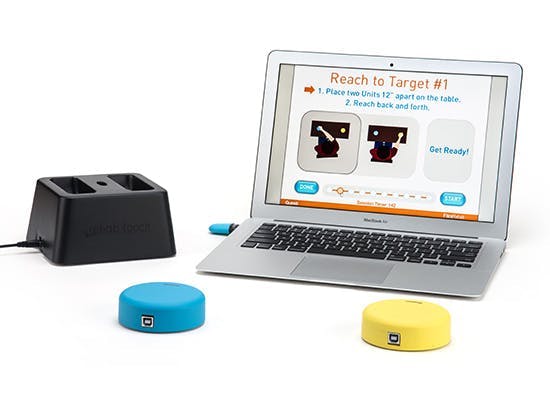
The FitMi is an interactive therapy tool that helps you retrain movement in your arms, hands, core, and legs. It comes with two wireless “pucks” that sense motion and connect to your computer or tablet.
When you place the pucks on different surfaces like a table for upper-body exercises or the floor for leg movements the system guides you through dozens of therapist-designed exercises. Each repetition you complete is counted in real time, giving you instant feedback and encouragement.
How FitMi Makes Repetition Easier
- Instant feedback: Every motion counts toward your progress. Seeing your score go up keeps you engaged and motivated to keep moving.
- Adaptive difficulty: FitMi automatically adjusts as you improve, keeping exercises challenging but achievable.
- Full-body variety: With over 40 exercises targeting the hands, arms, core, and legs, you can work multiple muscle groups in one session.
- Goal-driven structure: The program sets clear targets, helping you aim for specific milestones each day.
FitMi is designed to help you complete hundreds of repetitions per session, far more than what’s possible during traditional therapy appointments. This higher intensity helps drive faster gains in strength, range of motion, and coordination.
Learn more about the FitMi home rehab program.
MusicGlove: Turning Hand Therapy into a Musical Game
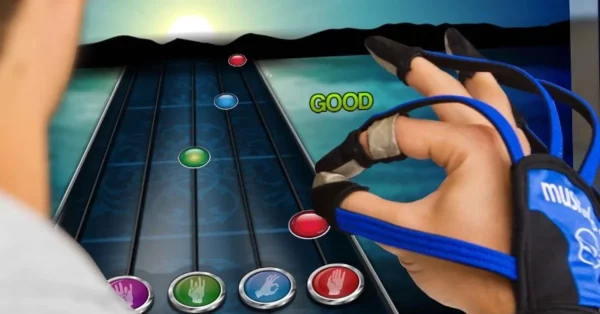
The MusicGlove is a hand therapy device that helps you regain hand movement and finger coordination after a stroke, brain injury, or spinal cord injury. It looks like a lightweight glove with sensors on the fingertips that detect your movements as you “play” along to music.
The glove connects to your computer or tablet, and the screen displays a musical game where you match notes to the beat by making gripping and pinching motions.
If you are familiar with the game Guitar Hero, think of it like that but for stroke rehabilitation.
How MusicGlove Encourages High Repetition
Because MusicGlove transforms therapy into an interactive experience you can complete hundreds of hand and finger movements in just one session, often without realizing how much work you’ve done.
Here’s why it works so well:
- Rhythm-based motivation: Moving to the beat of your favorite songs keeps you focused and engaged.
- Visual and auditory feedback: Seeing your accuracy score and hearing the music respond to your movements make every repetition rewarding.
- Variety of songs and levels: The mix of music and difficulty options keeps therapy fresh, so you’re less likely to give up.
- Clinically proven results: Research shows that MusicGlove users improve hand function significantly within just two weeks of consistent use.
By combining repetition with enjoyment, MusicGlove helps break through one of the biggest barriers to recovery: staying consistent.
Learn more about the MusicGlove home rehab program.
The Science Behind FitMi and MusicGlove
Both devices are built on the same neurological principle: the brain changes through practice. Each repetition strengthens the connections between neurons involved in movement, helping the body regain lost skills.
FitMi focuses on large, functional movements such as reaching, tapping, and lifting that retrain the brain’s control over the arms and legs. MusicGlove targets the fine motor control of the hand, improving grip, dexterity, and coordination.
Together, they stimulate different parts of the nervous system, encouraging balanced and comprehensive recovery.
Research supports this approach. Clinical studies show that high-repetition, task-specific training helps:
- Improve muscle strength and coordination
- Reduce stiffness and spasticity
- Increase independence in daily activities
- Boost motivation and confidence in recovery
By turning repetitive motions into interactive challenges, these tools make it possible to achieve the intensity and consistency your brain needs, all without leaving home.
Using FitMi and MusicGlove Together
While each device is effective on its own, many survivors achieve even faster progress when they use them together.
Here’s why:
- FitMi strengthens the larger muscles in the arms, core, and legs, improving overall control and stability.
- MusicGlove focuses on fine motor control and precision, helping you regain dexterity for detailed tasks.
By combining both, you address the full range of movement — from gross to fine motor skills — supporting a more complete recovery.
A typical daily routine might look like this:
- Morning: 15 minutes of FitMi for upper-body strength and coordination.
- Afternoon: A few songs with MusicGlove to work on hand movement.
- Evening: Another short FitMi session targeting leg or core exercises.
Breaking therapy into smaller, enjoyable segments makes it easier to stay consistent, while giving your brain repeated stimulation throughout the day.
View discount bundles — FitMi + MusicGlove Home Rehab for Stroke and Brain Injury
Why High Quality Home Rehab Tools Matter More Than Ever
Access to in-person therapy often depends on factors outside your control with things like insurance coverage, scheduling, or transportation. That’s why having effective home rehab tools like FitMi and MusicGlove can make such a lasting impact. They allow you to practice whenever it fits your day, so your progress isn’t limited by clinic hours or appointment availability.
With these tools, recovery becomes something you can own and manage from home. They also make it easier for caregivers and family members to participate, helping create a supportive environment where encouragement becomes part of the routine.
In the past, home therapy often meant working through simple paper exercises with little feedback or variety. But tools like the FitMi and MusicGlove have transformed that experience by bringing science, structure, and enjoyment into daily rehab. Their interactive design keeps you engaged, provides real-time feedback, and makes it easier to see the progress you’re working so hard to achieve.
Whether your goal is to pick up small objects, walk with more stability, or move with greater confidence, these tools help make that journey feel achievable and even fun one rep at a time.
Building a Habit of High-Repetition Therapy With FitMi and MusicGlove
Rehabilitation is built on consistency, and consistency thrives when therapy feels rewarding. FitMi and MusicGlove take the principles of neuroplasticity and make them accessible to anyone recovering at home.
By turning exercise into an engaging, feedback-driven experience, they help you achieve the high number of repetitions needed to rewire your brain all while keeping motivation strong.
Every repetition you complete brings you closer to regaining independence, one small victory at a time. With the right tools and a steady routine, recovery doesn’t just continue after therapy sessions, it thrives right in your living room.We hope you enjoyed this article and subscribe to our newsletter for weekly articles just like this delivered straight to your inbox — subscribe here.