
Hand function plays a vital role in everyday activities—from buttoning a shirt to holding a glass of water. When injury, surgery, stroke, or conditions like arthritis interfere with hand mobility or strength, physical therapy becomes an essential part of recovery. Fortunately, a wide range of physical therapy tools for the hands are available to make hand therapy more effective, engaging, and easier to do at home.
This guide takes a look at the best physical therapy tools for hands according to our experts, with practical options suited for different stages of recovery and conditions.
Why Use Hand Therapy Tools?
Physical therapy tools for the hands are more than just accessories. They play a key role in recovery by helping with:
- Repetition and consistency
- Targeted strengthening and coordination
- Range of motion improvements
- Sensory reeducation
- Reduced stiffness or spasticity
- Engagement and motivation
Whether you are recovering from stroke, surgery, or something else, the more regularly you use these rehab tools, the better the chances of regaining hand function and independence.
Now let’s jump in and take a look at the best hand physical therapy tools that can help you recover at home or in the clinic!
1. Therapy Putty
Therapy putty is a go-to option in most hand therapy programs and for good reason. It’s flexible, compact, affordable, and allows for a wide range of exercises, from basic squeezing to more advanced fine motor challenges.
Therapy putty is often recommended after surgery, during stroke recovery, or for those with arthritis-related stiffness. It’s easy to use at home or with guidance from a therapist, making it suitable for nearly any rehab setting.
Benefits:
- Improves grip and pinch strength
- Enhances finger dexterity
- Comes in multiple resistance levels
2. Hand Exercise Balls
Hand exercise balls are another flexible physical therapy tool for the hands. These silicone or foam balls come in various firmness levels and provide resistance for gripping, pinching, or rolling exercises.
Exercise balls are commonly used for general strengthening, tension release, and carpal tunnel relief. They’re particularly useful during early recovery or for light daily maintenance.
Benefits:
- Strengthens the entire hand
- Improves circulation
- Helps relieve stress
Shop Hand Exercise Balls on Amazon
3. Finger Extension Bands
Another great physical therapy tool for the hands and fingers are finger extension bands. While most people focus on gripping tools, these bands train the opposite motion—opening the hand. This creates a more balanced therapy routine.
These bands are ideal for people with clenched hands after a stroke, musicians, or anyone looking to support healthy hand alignment. Although finger extension bands with various levels of resistance are optimal, individuals can also use rubber bands of varying strengths as a more frugal option.
Benefits:
- Strengthens finger extensors
- Helps correct muscle imbalance
- Reduces the risk of repetitive strain
Shop Finger Extension Bands on Amazon
4. Grip Strengtheners (Spring-loaded)
Spring-loaded grip trainers are a classic strengthening tool for the hands in physical therapy. They’re especially helpful for improving crushing grip and forearm endurance. While some are designed to work on improving a full grip using all the fingers, others allow you to use one finger at a time. This allows you to target the strength of specific fingers and work on isolated movements.
These tools are often used by athletes and aging adults, although they also support recovery for those regaining hand control after neurological conditions. Always start with light resistance to avoid overuse injuries.
Benefits:
- Builds strong grip and forearm muscles
- Increases endurance
- Portable and easy to use anywhere
Shop Grip Strengtheners on Amazon
5. Hand Therapy Webs
Hand therapy webs are circular, stretchy devices that provide resistance in multiple directions. They’re excellent for comprehensive hand workouts.
This tool is useful for people looking to improve overall mobility, especially when managing conditions like arthritis or recovering from surgery.
Benefits:
- Strengthens multiple muscle groups
- Supports both flexion and extension
- Offers varied grip challenges
Shop Hand Therapy Webs on Amazon
6. Peg Boards and Therapy Puzzles
Peg boards involve inserting and removing small pegs or puzzle pieces, making them ideal for regaining coordination, dexterity, and even cognitive skills.
These tools are frequently used in stroke and brain injury rehab, as well as pediatric therapy sessions that combine movement and problem-solving.
Benefits:
- Builds fine motor control and precision
- Improves visual-motor coordination
- Encourages cognitive engagement
7. Therapeutic Hand Splints and Stretchers
Though not for active movement, splints and stretchers are valuable for passive stretching and positioning. These are commonly prescribed after stroke, spinal cord injury, or surgery—especially when fingers remain curled or stiff.
Of note, unless told differently by a medical professional, hand splints should not be worn around the clock. Rather, they should be taken off periodically throughout the day in order to practice targeted movements and hand exercises. Talk with your doctor or therapist for more information specific to your situation.
Benefits:
- Helps prevent contractures
- Reduces muscle tightness or spasticity
- Supports proper joint alignment
Shop Resting Hand Splints on Amazon
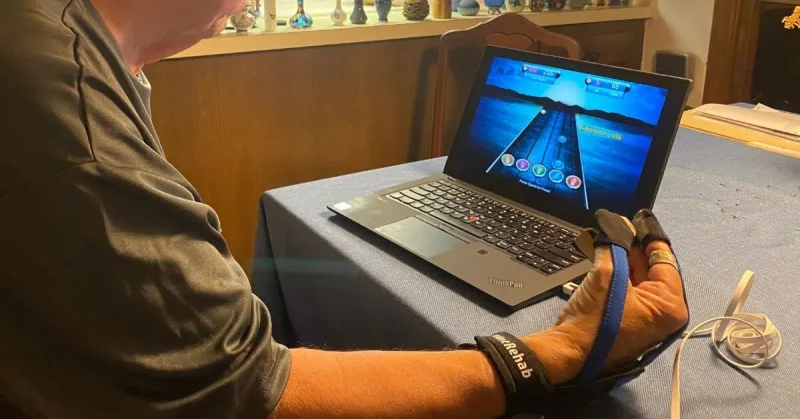
8. MusicGlove by Flint Rehab
If you’re looking for something a little more tech enabled, the MusicGlove could be a great choice. The MusicGlove turns hand therapy into a fun and interactive game that combines visual cues with rhythm, timing, coordination, and music.
It’s particularly helpful for stroke survivors, spinal cord injury patients, and individuals with neurological challenges and with just 15 minutes of daily use, many users report progress within a few weeks.
The MusicGlove is used by more than 400 rehab hospitals across the world and studies have demonstrated users can improve hand function in under 2 weeks with just 6 hours total use.
Benefits:
- Boosts motivation through music-based games
- Targets fine motor skills and grip
- Clinically proven to improve hand function
Shop MusicGlove Hand Therapy on Flint Rehab
What to Consider When Choosing a Physical Therapy Tool for the Hand
When choosing the right physical therapy tool for hand rehab, keep in mind that not every tool will work for every person. Here are some things to consider:
- Diagnosis: Tailor your tools to your specific condition, such as stroke, arthritis, or a recent injury.
- Recovery Stage: Start with gentle, low-resistance tools early on, and progress as you gain strength.
- Motivation: If staying consistent is tough, interactive tools can help make therapy more enjoyable and easier to stick with.
- Budget and Space: Choose affordable, compact tools you can use regularly.
- Professional Guidance: Ask your therapist which tools align with your goals and abilities.
Tips for Building a Physical Therapy Routine at Home With Your Hand Recovery Tools
Hand therapy is most effective when practiced regularly. To make it part of your day:
- Set reminders to complete short sessions at least twice a day
- Find time for hand exercises in your typical routine, such as practicing while watching your favorite show or right after breakfast
- Rotate between different tools to avoid boredom
- Track your progress to stay motivated
- Listen to your body and stop if you feel sharp pain
Remember that consistency is the key to lasting progress. Even on the days where you don’t feel like you can do much, try to stay in the habit and do what you can.
Over time, you will be amazed at how far you come!
Final Thoughts on Physical Therapy Tools for the Hands
Recovering hand strength and mobility is rarely about one big breakthrough. More often, it comes from steady practice, the right kind of challenge, and tools that make it easier to stay consistent over time.
Whether you start with something simple like therapy putty or explore other therapy tools, what matters most is finding an approach that fits your current ability and keeps you coming back day after day.
If you’re unsure where to begin or how to progress, a physical or occupational therapist can help you choose tools and exercises that align with your goals. With the right support and a consistent routine, home therapy can become a reliable part of your recovery—not just something you try, but something that works.
Want to learn more? Check out these related articles for improving hand therapy.
Improve Your Hand Function and Increase Strength with These 39 Hand Therapy Exercises to Try at Home
Helpful Hand Therapy Putty Exercises + Free PDF
The Best Hand Exercise Equipment for Stroke Patients
Maximizing Hand Recovery After Stroke: How to Improve Hand and Finger Mobility