

Did you leave your last appointment with more questions than you walked in with? After a stroke, it’s easy to nod along while a doctor uses words you’ve never heard before, then remember everything you meant to ask the second you’re back in the car.
You don’t have to guess what belongs on that list. The twelve questions below cover the ground your care team should already be walking you through. Knowing them ahead of time means you leave each visit with a real answer instead of a vague reassurance. Let’s dive in!
Table of contents
- 1. What Type of Stroke Did I Have, and Where in the Brain?
- 2. What’s My Risk of Having Another Stroke?
- 3. What Warning Signs Mean I Should Call 911 Right Away?
- 4. Why Am I on This Medication, and What Happens If I Miss a Dose?
- 5. Do I Have Any Signs of a Swallowing Problem?
- 6. When Can I Start Rehab, and What Kind Do I Need?
- 7. Should I Be Screened for Depression or Mood Changes?
- 8. When Is It Safe for Me to Drive Again?
- 9. What Are My New Blood Pressure and Cholesterol Targets?
- 10. How Will We Track My Progress and Adjust My Plan?
- 11. What Can I Safely Practice at Home Between Appointments?
- 12. Who Else Should Be Part of My Care Team?
- Moving Forward
1. What Type of Stroke Did I Have, and Where in the Brain?
This sounds basic, but it’s the foundation everything else builds on. Two things shape everything that follows: whether you had an ischemic stroke (a blockage) or a hemorrhagic stroke (a bleed), and which part of the brain was affected. Together, they determine which functions are likely involved and which rehab specialists you’ll need. A stroke in the area controlling the right hand needs different practice than one affecting speech or swallowing.
Ask your doctor to point out, in plain terms, which brain region was involved and what that area typically controls. This is also the moment to ask what “ischemic” or “hemorrhagic” actually means if the terms weren’t explained the first time. You’re not expected to already know this language.
2. What’s My Risk of Having Another Stroke?
Roughly 1 in 10 stroke survivors will have another stroke within a year, and the risk is highest in the first six months (Ovbiagele, Stroke, AHA Journals). That number isn’t meant to scare you. It’s meant to explain why the next several questions on this list, about blood pressure, cholesterol, and medication, aren’t optional extras. They’re the plan for lowering your specific number.
Ask your doctor what your personal recurrence risk looks like given your stroke type, other health conditions, and risk factors, since this figure varies a lot person to person. Our team has also covered recurrent stroke risk and how prevention works over time in more depth.
3. What Warning Signs Mean I Should Call 911 Right Away?
Recurrence risk is highest in the first six months. You should know the signs of a new stroke well enough that you don’t have to stop and think. Not just recognize them, but know they mean acting immediately, not waiting to see if they pass.
Ask your doctor to walk through the classic sudden-onset signs (face drooping, arm weakness, speech difficulty) and also ask what’s specific to your situation. If your first stroke didn’t look “textbook,” a repeat one might not either, and it helps to know what your particular warning pattern could look like.
4. Why Am I on This Medication, and What Happens If I Miss a Dose?
Blood thinners, blood pressure medication, and statins each do a different job in lowering your recurrence risk, and understanding the “why” behind each one makes you far more likely to stick with it consistently.
What many people get wrong: treating a missed dose as no big deal, or stopping a medication once they feel fine, without realizing the medication is what’s keeping them feeling fine.
Ask specifically what each medication is doing, what signs would mean it’s not working, and what to do if you miss a dose or run low before a refill. If a medication is giving you side effects that make you want to skip it, say so. There’s almost always an alternative to discuss rather than quietly going off it.
5. Do I Have Any Signs of a Swallowing Problem?
Difficulty swallowing, called dysphagia, affects somewhere between 37% and 78% of stroke survivors. It roughly triples pneumonia risk, and that risk climbs even higher if food or liquid is actually being breathed into the airway instead of swallowed (Aspiration Pneumonia After Stroke, PMC).
It’s often subtle.
Coughing during meals, a wet-sounding voice afterward, or food seeming to get stuck are all worth mentioning, even if you feel like you’re managing fine.
Ask whether you’ve been screened for swallowing problems and, if any signs are present, ask for a referral to a speech-language pathologist.
6. When Can I Start Rehab, and What Kind Do I Need?
There’s no single fixed calendar for starting rehab; the right timing depends on your stroke severity and how you’re recovering day to day (Guidelines for Adult Stroke Rehabilitation and Recovery, AHA Journals). What matters more than the exact start date is that the therapy is specific to what you actually want back. Walking practice rebuilds walking. Hand- and task-specific practice rebuilds hand use. Generic exercise doesn’t substitute for either.
This is where neuroplasticity, the brain’s ability to rewire itself, comes in: it responds to repeated, meaningful practice of the specific movement you’re trying to regain, not to activity in general.
Ask which type of therapy (physical, occupational, speech, or a combination) fits your specific goals, and ask what a realistic weekly practice schedule looks like once you’re home.
About 6 in 10 people who were treated in the hospital for a stroke are referred to outpatient rehab afterward. If you weren’t offered a program, it’s completely reasonable to ask why not (referral pattern data, PMC).
7. Should I Be Screened for Depression or Mood Changes?
Depression affects close to a third of stroke survivors (post-stroke depression review, PMC). It’s frequently missed, too, because low motivation or a flat mood can be mistaken for something else, or dismissed as a normal reaction instead of a treatable condition. Left unaddressed, it also tends to slow physical recovery, since motivation and participation in therapy are closely linked.
Ask to be screened, even if you feel okay, and ask again at follow-up visits, since post-stroke depression can appear weeks or months after the event rather than immediately. If sadness, loss of interest, or sleep and appetite changes show up, bring them up plainly rather than waiting to be asked.
Our team has written more on recognizing and coping with post-stroke depression if you want a deeper look.
8. When Is It Safe for Me to Drive Again?
Many guidelines suggest waiting at least four weeks after a mild stroke before driving (NHTSA DRIVEWELL stroke guidance, NHTSA.gov; Can I drive after my stroke?, PMC). But the real answer depends on your vision, reaction time, and thinking speed, not the calendar alone. Driving before you’re cleared isn’t just a legal risk. It’s a real safety risk to you and everyone else on the road.
Ask your doctor directly whether you’re cleared to drive, and if you’re not there yet, ask what specific ability needs to improve first and whether a driving rehabilitation evaluation makes sense. Most survivors do eventually return to independent driving, so treat this as a “when,” not an “if,” and see our full breakdown of driving after stroke for what that evaluation typically involves.
9. What Are My New Blood Pressure and Cholesterol Targets?
Secondary stroke prevention guidelines set specific targets for most people after an ischemic stroke: blood pressure under 130/80 mm Hg and LDL cholesterol under 70 mg/dL (AAFP summary of AHA/ASA guideline; full AHA/ASA guideline, PubMed). These numbers are often stricter than general population targets, which surprises a lot of people.
Ask your doctor what your specific numbers are and how they compare to before your stroke. Ask what combination of medication, diet, and activity is expected to get you there. A Mediterranean-style eating pattern and at least four 10-minute bouts of moderate activity a week are common starting points. But your plan should be specific to you, not generic advice to “eat healthier.”
10. How Will We Track My Progress and Adjust My Plan?
Recovery isn’t a straight line, and a plan that made sense at week two often needs to change by week twelve as strength, balance, or speech improve. The golden rule of a good follow-up visit: leave with one specific, written next step. Not just a general “keep doing what you’re doing.”
Ask how progress will actually be measured between visits. That might be a specific distance walked, a task performed with less assistance, or a formal assessment tool. Also ask what would trigger a change in your therapy intensity or medication. Progress can look like small, concrete wins: transferring more safely, reaching a little farther, or needing less help to get dressed. Those count, even when they don’t feel dramatic.
11. What Can I Safely Practice at Home Between Appointments?
Therapy sessions add up to a small fraction of your week. What you do the rest of the time matters just as much, provided it’s the right kind of practice and not just generic activity.
Home practice is meant to complement your therapy team’s plan, not replace it, so this should be a specific conversation, not a pamphlet handed to you on the way out.
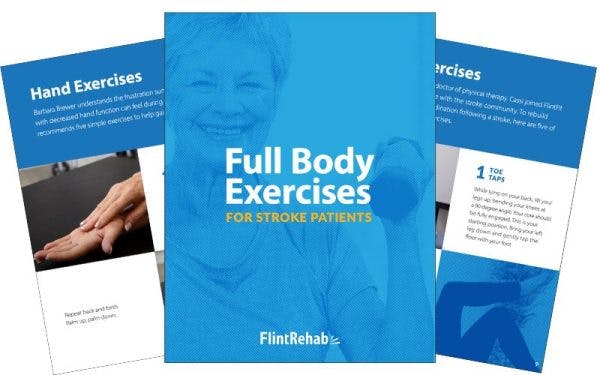
Ask your therapist or doctor for two or three concrete exercises tied to your actual goals. Consider: that might be a stretch to help relax tight muscles, a simple balance activity to make standing and walking steadier, or a hand exercise to make everyday tasks like buttoning a shirt or holding a cup easier.
Also ask how you’ll know when something has gotten too easy and needs to be made harder. If a movement is still out of reach on your own, ask about assisted versions. Practicing a pattern with help still builds the repetition your brain needs, even before you can do it independently.
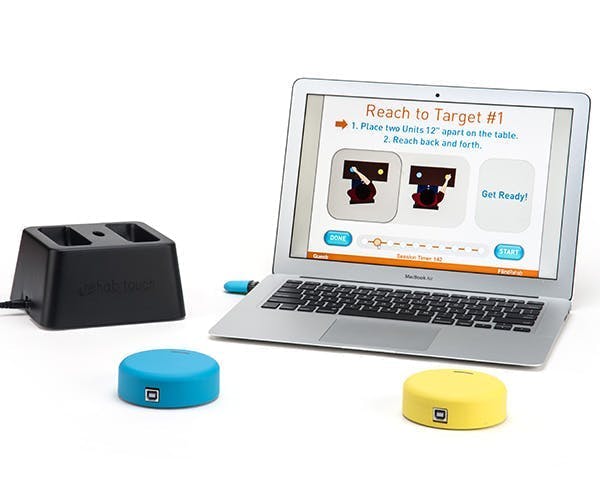
Learn more about the Flint Rehab Remote Neuro Recovery Program
12. Who Else Should Be Part of My Care Team?
Stroke recovery usually involves more people than just your primary doctor: a neurologist, physical and occupational therapists, a speech-language pathologist, and sometimes a psychologist or social worker, depending on what you’re working through. Gaps happen most often when nobody is coordinating between these specialists.
Ask who’s currently on your team, who’s missing, and who is responsible for making sure everyone is working from the same plan. If you’re not sure who to call with a new symptom or question between appointments, ask that directly too. Having one clear point of contact prevents a lot of confusion down the line.
Moving Forward
Recovery after a stroke doesn’t run on a fixed timeline, and there’s no appointment where a doctor waves a wand and declares you finished. Progress can continue, and often does, well past the point most people expect it to stop.
Bringing a list like this one to your next visit isn’t about being a difficult patient but rather making sure the conversation covers what actually shapes your recovery and not just what fits in a fifteen-minute slot.
If you only bring one question, make it whichever one you’ve been quietly avoiding. That’s usually the one worth asking most.
We hope you enjoyed this article and subscribe to our newsletter for weekly articles just like this delivered straight to your inbox — subscribe here.
Here are some additional articles you might be interested in:
- Recurrent Stroke: Understanding Risks and Prevention Beyond the First Year
- Neuroplasticity After Stroke: How the Brain Rewires Itself to Recover from Injury
- Post-Stroke Depression: Causes, Treatment Options, and Tips to Manage the Emotional Effects
- Can You Drive After a Stroke? Safety Considerations and Rehab Techniques