
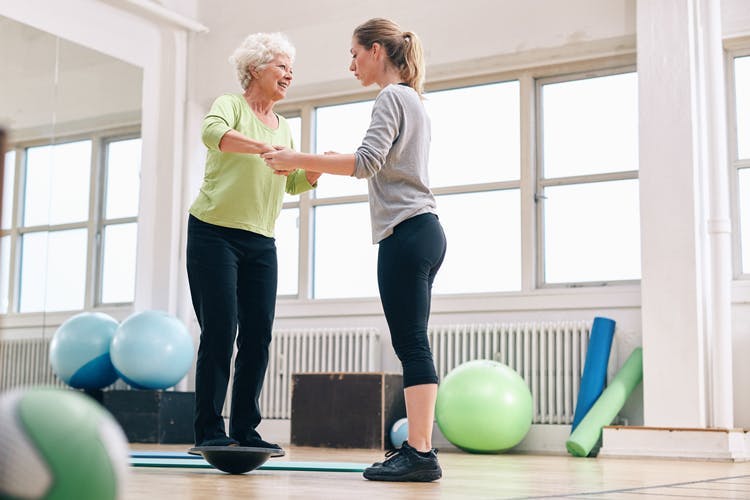
Balance is a complex function that incorporates sensory, motor, and cognitive skills. That is a big part of what makes regaining balance after stroke so challenging, with about 83% of stroke survivors suffering from balance impairment.
However, understanding what causes these challenges specifically after stroke and knowing what to do can help you regain balance faster and become more steady as you continue to recover. In this article, we will take a look at what causes us to struggle with balance after a stroke, what the latest research says as well as the best way to go about retraining and improving your balance.
Let’s dive in!
Table of contents
- What Causes Balance Problems After Stroke?
- The 3 Systems That Keep You Balanced
- 5 Effective and Proven Methods for Regaining Balance After a Stroke
- How Consistent Rehabilitation Can Help Stroke Survivors Regain Balance After Stroke
- Practical Considerations Regarding Regaining Balance After Stroke
- Understanding How to Regain Balance After Stroke
- Additional Resources for Regaining Balance After Stroke
What Causes Balance Problems After Stroke?
A stroke occurs when there is a disruption to the blood flow to or within the brain, resulting in damage to the affected areas of the brain. Depending on where in the brain the stroke occurred, survivors may experience numerous secondary effects, including impaired balance.
One of the big challenges in regaining balance after a stroke is that balance is a complex function that incorporates many different parts of the brain including the:
In addition to areas of the brain being labelled by structure, the brain can be divided into left and right hemispheres where each hemisphere of the brain controls the opposite side of the body.
Damage to only one side of the brain results in motor difficulties on the opposite side of the body, such as hemiplegia (paralysis on half the body) and hemiparesis (weakness on half the body).
And since balance requires coordination from both sides of the body, survivors with hemiplegia or hemiparesis often experience impaired balance.
However, while motor functions are essential to balance, the sensory systems also play a vital role. Changes in a person’s vision, sensation, vestibular system (sense of head motion and spatial orientation) and/or proprioception (sense of where the body is positioned in space) after a stroke can all impact one’s balance.
Poor balance puts stroke survivors at a greater risk of falling, which can compound injuries and lead to further complications. For this reason, many therapists prioritize balance therapy during inpatient and outpatient rehabilitation. Pursuing rehabilitation is vital to regaining balance after stroke.
Now let’s take a closer look at each of the 3 systems that help keep you balancedn when thigns are working properly.
The 3 Systems That Keep You Balanced
To reiterate, balance is not one skill.
Your brain pulls together three systems at once which include what you sense, how your muscles respond, and how well you pay attention. When one system struggles the others try to cover for it but that can be a challenge. That is why a person with numb feet may feel fine at home but unsteady on a dark walk to the bathroom. The brain leans on vision for help and at night there is less to see.
This is why knowing which systems are affected is extremely important because it tells you the right balance exercises to choose/prioritize (learn more about great balance exercises for stroke survivors here).
Let’s take a deeper look at each.
Sensory: What Your Eyes, Inner Ear, and Body Tell Your Brain
Your brain gets sensory balance clues from three places:
- Vision: Your eyes are your brain’s fastest source of balance information. After stroke, vision changes like double vision, trouble scanning a page, or trouble seeing contrast can make you less steady.
- Vestibular system: This is your inner ear’s built-in motion sensor. It tells your brain how your head is moving. When it is off, you may feel dizzy, sway, or feel “off” when you turn. Our guide on dizziness after stroke helps explain some of the common causes and treatments.
- Body sensation: This includes feeling the ground under your feet and knowing where your limbs are in space. Numbness or tingling can take that feedback away.
What we see a lot of people get wrong is that dizziness is not a reason to skip balance work, but it is a reason to get checked first to see which exercises might be appropriate and which ones aren’t. Ask your doctor about seeing a vestibular therapist before you start things like head-turning drills on your own.
Motor: How Fast Your Muscles React
Even with good sensory information, your muscles have to act on it. Your hips, thighs, calves, and core make quick corrections that keep you upright. They help you catch yourself when you sway, take a fast step when you slip, and tighten your trunk so you do not tip forward.
In addition, your brain also plans ahead. Before you stand up, your core and leg muscles switch on a split second early. Before you reach for a shelf, your body shifts weight to stay steady. You might rarely notice this but it is a big part of staying safe.
Stroke can weaken these muscles or slow the timing but the good news is that repeated practice helps the brain rebuild these pathways.
Cognitive: Thinking While You Move
Finally, balance also needs attention. Many survivors walk well around the house then feel shaky in a busy parking lot or grocery store. That’s because places like that demand a greater cognitive load because they are asking your brain to balance and think at the same time.
One interesting study to consider, in 93 people with chronic stroke, around 39% had at least one fall during follow up. A test that combined obstacle crossing with a thinking task (dual tasking) correctly sorted 80% of participants into future fallers and non-fallers. This suggests that how you handle walking plus thinking says a lot about real-world fall risk.
5 Effective and Proven Methods for Regaining Balance After a Stroke
There are a number of effective interventions to help survivors regain balance after stroke. Because every stroke is different, each survivor will benefit from different rehabilitation methods.
It’s often helpful for survivors to try different methods to see which works best for their needs. Consulting with a physical or occupational therapist can also help survivors gain personalized recommendations on which rehabilitation techniques may be optimal.
Here are some of the best ways to regain balance after stroke:
1. Consistent Balance Training
If you pick one thing from this list, pick regular balance practice. A network meta-analysis of 15 randomized trials compared eight types of exercise for preventing falls after stroke. Balance training ranked first. Combined movement and thinking training, multimodal exercise, and resistance exercise ranked next.
Here is how to get the most from your practice:
- Practice the task you want to improve. If stairs feel shaky, practice stairs with support. The brain improves at what it repeats.
- Strengthen the middle of your body. Work the core, glutes, and quads. These muscles drive your quick balance reactions.
- Change one thing at a time. Try eyes closed, a softer surface, or feet closer together. Do this only with a stable surface nearby and someone close by.
- Track your progress. Note how long you can hold a position, how many reps you do, and how steady and confident you feel.
- Make it harder slowly. When an exercise feels easy, add a challenge.
Something to note is that consistency matters more than intensity. Short, regular sessions you can keep up beat rare long ones. For a list of exercises we recommend, check out our list of balance exercises for stroke patients.
2. Address Foot Drop (as appropriate)
A common cause of balance challenges after stroke is a condition called foot drop. Often occurring in survivors with hemiplegia, foot drop impairs the ability to lift the front portion of the foot. This causes the foot to drag on the floor while walking, impairing balance and increasing the likelihood of falling.
Using a brace called an ankle foot orthotic, such as the Flex AFO, is a common treatment for addressing impaired balance due to foot drop. However, while using an AFO may keep the toes from dragging, it does not help survivors actually improve their balance or their mobility. Therefore, in order to truly improve, it is important to address the root cause of the foot drop by practicing foot drop exercises.
3. Aquatic Therapy
In addition to practicing rehabilitative exercises on land, many survivors experience significant improvements through aquatic therapy. Sometimes referred to as hydrotherapy, aquatic therapy involves practicing rehabilitative exercises in a warm pool.
Aquatic therapy has numerous benefits for survivors experiencing balance deficits. The warmth of the water can reduce muscle pain and tension, the water’s resistance can improve strength, and practicing in a pool usually reduces the fear of falling.
Furthermore, multiple studies have found that aquatic therapy can be an effective intervention for improving balance after stroke. These factors make aquatic therapy an excellent treatment option to help survivors with regaining balance after stroke.
4. Virtual Reality Training Programs
In recent years, virtual reality training programs have become frequently used as a form of therapy for stroke survivors. Studies have demonstrated that many virtual reality training programs can even be more effective than conventional therapies for improving balance.
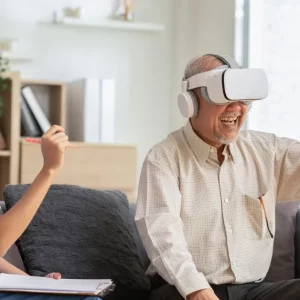
Virtual reality training may take on many forms, including using a headset to visually simulate different situations or using a balance board to track weight-shifting movements. Games, such as those in Nintendo Wii Fit, are frequently used to improve engagement in balance activities.
Virtual reality training programs are often are very motivating for survivors and have the ability to provide detailed, real-time visual, auditory, and tactile feedback on performance. Since many virtual reality training programs use readily available devices, survivors also have the ability to purchase many programs for home use. Therefore, virtual reality training programs are frequently recommended for survivors to use when working toward regaining balance after stroke.
Can Virtual Reality Help Stroke Recovery? A Closer Look at the Research
5. Yoga
Practicing yoga is another method to help survivors with regaining balance after stroke. Yoga includes practicing postures designed to be modifiable, allowing it to be adapted to almost any survivor’s skill level.
In addition to helping with motor skills such as balance, yoga is also able to promote relaxation and mindfulness while reducing stress and anxiety. Practicing yoga can also reduce the risk of falls among stroke survivors.
While yoga classes are offered in many areas, it is best for survivors to discuss modified yoga postures with a physical or occupational therapist to learn which poses are safe and appropriate for them. In fact, some therapists are designing yoga programs specifically for stroke survivors, which would be an optimal opportunity to work on regaining balance after stroke in a supportive environment.
While the methods listed above are excellent options for survivors to try, most of them focus primarily on the physical aspects of regaining balance after stroke. Some survivors may also benefit from therapies addressing sensory deficits, cognitive changes, and attentional neglect to restore balance.
As always, survivors should consider consulting with a physical or occupational therapist to learn which specific interventions would be most effective for their needs. Regardless of which type of rehabilitation method used, consistently practicing balance-related exercises and activities is the best way to promote adaptive changes in the brain and lasting functional improvements.
5 Huge Benefits of Yoga for Stroke Patients (and How to Get Started)
How Consistent Rehabilitation Can Help Stroke Survivors Regain Balance After Stroke
A stroke affects the brain’s ability to effectively perform functions associated with damaged areas. For example, when a stroke has damaged the brain’s ability to correctly send signals to certain muscles of the body, the muscles may become difficult or impossible to move.
Fortunately, the brain can be adaptively rewired, allowing healthy brain tissue to take over responsibility for functions controlled by damaged areas. This process is known as neuroplasticity, and is essential for regaining balance after stroke.
Neuroplasticity is activated through repetitive practice. Whenever an exercise or activity is practiced, the neural pathways in the brain responsible for that task are strengthened. More practice results in stronger neural pathways, and an improved performance of the task.
Therefore, to regain balance after stroke, survivors should consistently practice balance therapy exercises. While these exercises may look different depending on whether impaired balance is a result of affected motor or sensory functions, repetitive practice will help to rewire the brain and promote lasting improvements.
Practical Considerations Regarding Regaining Balance After Stroke
After a stroke, there are some practical considerations to make regarding regaining your balance.
For one, each stroke is unique which means every individuals prognosis and recovery process after stroke is highly variable. With that said, the first 3 to 6 months matter a lot since right after a stroke the brain is more flexible than usual making it easier to build new connections and regain skills.
By six months, 65 to 85% of survivors walk on their own again. Since balance is a big part of walking many survivors see their balance improve here along the way.
After 6 months, individuals still struggling with balance (and even those that aren’t) can continue to practice balance training or skills under the supervision of a trained caregive or therapist. This can help minimize the possibility of falling which prevents further injuries and complications. Remember, while stroke recovery varies, survivors that consistently pursue their rehab outside the clinic have the best chance to optimize their recovery because there is always hope for recovery, even decades after stroke.
Here are a few additional thigns we want you to remember when continuing to work on your balance after stroke.
Set Up a Safe Place to Practice
A safe setup lets you focus on the exercise instead of worrying about a fall. Before each session:
- Stand near a stable surface, such as a kitchen counter in front of you.
- Place a sturdy chair or a corner behind you.
- Clear clutter from the floor around you.
- Turn on bright lighting.
- Have someone nearby the first time you try a harder move.
Using a Walker or Cane Is Not a Step Backward
Many survivors feel that a walker or cane means they are losing ground. The opposite is often true. A device that helps you stand and walk more often gives you more practice. More practice means more chances to improve.
Think of a device as a bridge. Use it to stay active and independent now, then work with your therapist on when to use it less. Ask your team, “What would I need to be able to do before trying a cane instead of a walker?”
Get Medical Help Right Away When…
Stop your exercises and get medical help right away if you notice any of these:
- Sudden dizziness
- New weakness
- A sudden, severe headache
- Sudden numbness
Treat these as emergencies. Call 911 and tell your medical team afterward.
Understanding How to Regain Balance After Stroke
Balance problems may occur for a variety of reasons after stroke. However, pursuing rehabilitation to address balance deficits is often the best way to promote improvements. Specifically, consistently and repetitively practicing tasks involving balance can encourage adaptive changes in the brain, thereby helping survivors regain balance after stroke.
While the most effective therapeutic techniques vary from person to person, many find the options we have outlined above to be beneficial in regaining their balance over time.
Consulting a physical or occupational therapist to discover which therapeutic methods are best for an individual’s specific condition is highly recommended and with regular participation in rehabilitation many survivors are able to regain their balance after stroke!
Want more help with retraining balance after stroke, check out our free balance eBook for stroke survivors here.
We hope you enjoyed this article and subscribe to our newsletter for weekly articles just like this delivered straight to your inbox — subscribe here.
Additional Resources for Regaining Balance After Stroke
Here are some additional articles you might find helpful:
- Why You Feel Dizzy After Stroke and What Can Help: Learn what causes dizziness and unsteadiness after stroke, and which treatments can make standing and walking feel safer.
- 7 Ways to Prevent Falling After Stroke: Find simple steps for your home and daily routine that lower your risk of a fall.
- Ataxia After Stroke: Why Your Movements Feel Shaky and Uncoordinated: See how a cerebellar stroke can affect balance and coordination, and what recovery can look like.
- How to Improve Proprioception After Stroke: Discover four ways to help your body sense where it is in space, which supports steadier balance.
- 9 Gait Training Exercises for Stroke Patients: Try these exercises to build a safer, more confident walking pattern once your balance improves.
Regaining Balance After Stroke Webinar
Balance problems can make everyday activities feel uncertain, from standing up and walking across a room to stepping outside, using stairs, or moving through a crowded space.
But balance is more than simply “being steady.”
It depends on your strength, coordination, sensation, vision, vestibular system, and your brain’s ability to process all of that information together.
Check out our recent webinar with therapist Rachel Higdon, PT, DPT which takes a deeper look at why balance can become difficult after stroke and other neurological injuries, what recovery can look like, and the strategies that may help you continue improving.