

Staying consistent with daily rehabilitation exercises is an important part of stroke recovery. Unfortunately, getting your loved one to complete those exercises isn’t always easy especially when some days they may feel too tired, frustrated, or simply uninterested in practicing.
For caregivers (especially if it is a loved one) this can be challenging, because you know how important repetition and consistency are for stroke recovery as they are what drive neuroplasticity or the rewiring of the brain.
In this article, we’ll take a look at some of the different reasons why motivation can decline after stroke. Then we’ll share 7 practical strategies to encourage daily exercises through incentives as well as making rehab more engaging/fun so you can continue to support a loved one’s progress at home.
Let’s jump in!
Table of contents
- Quick Summary on Motivating and Incentivizing A Loved One After Stroke
- Why Motivation Drops After Stroke
- Why Home Practice Matters So Much
- 7 Ways to Motivate and Incentivize Stroke Survivors to Do Their Daily Exercises at Home
- Final Thoughts on Incentivizing and Motivating a Loved One to Complete Their Daily Exercises
- Related Articles
Quick Summary on Motivating and Incentivizing A Loved One After Stroke
- Low motivation after stroke is often caused by the stroke itself, not by laziness or stubbornness.
- Apathy, depression, and fatigue are common and treatable reasons, so mention them to the care team.
- Small, meaningful goals, visible progress, and practice built into daily life help most people stay consistent.
- Doing exercises together, making them fun, and giving your loved one choices can make a real difference.
- Simple incentives that reward effort, like a points jar or a weekly treat, can give a short-term reason to show up.
- Pushing harder or nagging usually backfires. Lowering the barrier usually works better.
Why Motivation Drops After Stroke
When a stroke survivor struggles to complete their daily exercises it’s easy to assume they simply lack motivation. However, stroke can affect the areas of the brain responsible for motivation, mood, and behavior. Couple that with physical fatigue, emotional challenges, and frustration with the pace of recovery and it can become incredibly difficult for anybody to stay consistent.
Understanding these challenges can help caregivers identify what’s getting in the way and find better ways to encourage the right routine/behavior. So before we jump into the strategies, let’s take a look at some of the most common reasons motivation may decline after stroke.
Apathy After Stroke
Apathy is a common effect of stroke that can reduce a person’s motivation to initiate or participate in activities, including rehabilitation exercises. Even when a stroke survivor understands the importance of therapy, they may struggle to get started or stay engaged. In fact, a review of 39 studies involving more than 5,000 stroke survivors found that approximately 33% experienced apathy.
It is important to understand that apathy is not the same as depression. Research suggests that apathy can occur independently of depression or cognitive difficulties. A stroke survivor may genuinely want to improve but have difficulty taking the initiative to practice.
Depression After Stroke
Depression after stroke can also have a significant impact on motivation and participation in rehabilitation. According to the American Heart Association, approximately one in three stroke survivors experiences depression at any given time.
Feelings of sadness, hopelessness, or a loss of interest in previously enjoyable activities can make daily exercises feel overwhelming or unimportant. Recognizing the signs of depression and seeking appropriate support can help address this barrier to recovery.
Post-Stroke Fatigue
Fatigue after stroke is more than ordinary tiredness. It can involve persistent physical or mental exhaustion that isn’t fully relieved by rest. Research suggests that approximately half of stroke survivors experience fatigue.
Because everyday movements may require significantly more effort after stroke, even a short exercise session can feel exhausting. This can make it difficult to maintain a consistent rehabilitation routine, particularly when exercises aren’t adapted to the individual’s energy levels.
Frustration With Slow Recovery Progress
Recovery after stroke isn’t always linear. While some survivors experience noticeable improvements early on, progress may become slower or less obvious over time. This is sometimes referred to as a stroke recovery plateau.
When improvements become harder to recognize, stroke survivors may begin to question whether their exercises are making a difference. This frustration can reduce motivation, even though continued practice may still support meaningful improvements in movement and function.
Lack of Structure and Accountability at Home
During formal rehabilitation, stroke survivors typically follow a structured schedule with guidance, encouragement, and feedback from their rehabilitation team. Once therapy ends, maintaining that same consistency at home can become challenging.
Without scheduled sessions or someone providing regular encouragement, daily exercises may become easier to postpone or skip. In fact, one small study found that participants performed home exercises more consistently during a structured program, with participation declining after the program ended.
Establishing a regular routine, tracking progress, and creating opportunities for accountability can help stroke survivors stay engaged with their home rehabilitation exercises.
Why Home Practice Matters So Much
Consistent exercise is an important part of stroke recovery because it helps promote neuroplasticity, the brain’s ability to reorganize itself and form new neural connections. Through repetitive practice, stroke survivors can help strengthen the pathways involved in movement and other functions affected by stroke.
However, traditional therapy sessions may not always provide enough repetition to maximize recovery. One study examining 312 rehabilitation sessions found that stroke survivors completed an average of just 32 arm and hand repetitions per session. In addition, after in person therapy ends there might still be room for recovery with home practice but it needs to involve high amounts of repetitive, task-specific practice as that is what research shows is beneficial for improving motor function.
This is where home rehabilitation becomes especially important. Practicing exercises between therapy sessions provides additional opportunities to reinforce movement patterns, build skills, and work toward greater independence.
Home exercises aren’t meant to replace professional rehabilitation. Instead, they complement formal therapy by encouraging consistent practice and helping stroke survivors continue working toward their recovery goals. (Learn more about our Remote 1-1 Neuro Recovery Program)
Now with that said, let’s look at some strategies to help motivate your loved one to get them active and doing daily exercises at home!
7 Ways to Motivate and Incentivize Stroke Survivors to Do Their Daily Exercises at Home
The best strategies to motivate and incentivize your loved one will depend on the specific challenges they are having but the strategies below can give you some ideas to get started.
Let’s take a look!
1. Tie the Exercises to a Goal They Actually Care About
Stroke rehabilitation exercises can feel repetitive, especially when the purpose behind them isn’t immediately clear. Connecting exercises to activities your loved one wants to regain, such as getting dressed independently, preparing a meal, or playing with their grandchildren, can help make daily practice feel more meaningful.
“Do your arm exercises” is hard to get excited about. “Practice so you can hold your granddaughter” is different. Goals give the work a reason.
So instead of focusing solely on completing a certain number of repetitions, emphasize how those movements contribute to greater independence and improved quality of life.
Research suggests that setting meaningful rehabilitation goals may help improve motivation and engagement. A Cochrane review of 39 studies involving 2,846 rehabilitation participants found that goal setting may improve self-efficacy and quality of life, although the overall quality of evidence was limited. Another review focused on stroke rehabilitation suggested that goal setting may help improve patient engagement.
How to put this into practice:
- Identify meaningful goals: Ask your loved one which everyday activities they would most like to regain.
- Set achievable milestones: Break larger goals into smaller, measurable steps that can be practiced regularly.
- Connect exercises to those goals: Work with their rehabilitation team to identify exercises that support the movements and skills needed to achieve them.
For more guidance, explore our article on goal setting for stroke patients.
2. Make the Ask Smaller
Daily rehabilitation exercises can feel overwhelming for stroke survivors especially for those that might be feeling fatigue, apathy, or specific physical limitations. Starting with shorter, more manageable exercise sessions can help reduce frustration and make it easier to establish a consistent routine.
Rather than expecting your loved one to complete a lengthy exercise program all at once encourage them to focus on small, very achievable goals. A few minutes of focused practice might seem pointless but it can be a really valuable starting point especially towards building a more sustained habit.
How to put this into practice:
- Start with short sessions: Begin with 5 to 10 minutes of exercise, adjusting the duration based on your loved one’s abilities and rehabilitation recommendations.
- Establish a daily routine: Schedule exercises around familiar activities, such as after breakfast or before watching a favorite television show, to make them easier to remember.
- Break exercises into smaller sessions: If fatigue is an issue, spread exercises throughout the day rather than completing everything at once.
As your loved one becomes more comfortable with their routine you can start to increase the time, repetitions, or difficulty of exercises as appropriate.
3. Track Everything to Make Progress More Visible
Stroke recovery can be a gradual process and improvements aren’t always easy to recognize especially after the first few months. And when progress feels slow, many stroke survivors start to feel discouraged and question whether the effort each day is even worth it.
Tracking progress and making it visible (through a chart or something you can hang in a regular area like the kitchen or living room) can help make those improvements more visible while providing a sense of accomplishment and motivation to continue practicing. Even small changes in strength, coordination, range of motion, or independence can serve as meaningful reminders of how far your loved one has come.
How to put this into practice:
- Create an exercise tracker: Use a calendar or simple chart to record completed exercise sessions and encourage consistency.
- Document improvements over time: Take occasional videos of your loved one performing specific movements or everyday activities to help identify changes that might otherwise go unnoticed.
- Track measurable achievements: Record repetitions, exercise duration, range of motion, or other relevant milestones to demonstrate progress over time.
- Recognize everyday accomplishments: Celebrate improvements in daily activities, such as holding a cup more steadily, getting dressed with less assistance, or reaching for an object more easily.
Remember that progress after stroke isn’t always linear and some improvements can happen fast while others mnight happen more gradually or take longer to notice.
For additional guidance, explore our article on the signs of recovery from stroke.
4. Turn Practice Into a Game
By making exercises more interactive and rewarding, games can help shift the focus from simply completing repetitions to achieving milestones and enjoying the process. This can make it easier for stroke survivors to stay consistent with their home rehabilitation routine.
Research supports the use of gamification in stroke rehabilitation. One review found that game-based rehabilitation can be a feasible and effective approach, while a separate meta-analysis found that rehabilitation games may offer additional benefits for upper extremity recovery compared to conventional exercises.
How to put this into practice:
- Create friendly challenges: Encourage your loved one to work toward a specific number of repetitions or try to improve their previous performance.
- Incorporate everyday games: Use activities such as balloon volleyball, target-reaching games, or object-sorting challenges to make movement practice more interactive, when appropriate for their abilities.
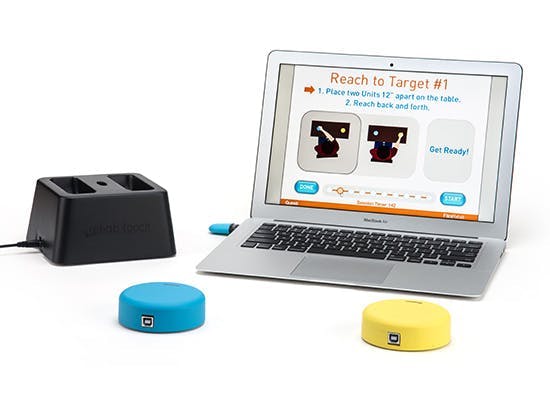
- Use gamified rehabilitation devices: Consider rehabilitation tools that combine therapeutic exercises with interactive games, performance feedback, and progress tracking.
For example, Flint Rehab offers two devices designed to make repetitive rehabilitation more engaging:
- FitMi: An interactive rehabilitation device that turns repetitive arm, hand, core, and leg exercises into game-like activities. It tracks repetitions, provides feedback, and adjusts exercise difficulty to help stroke survivors stay challenged and motivated.
- MusicGlove: A music-based rehabilitation device that encourages repetitive finger movements through an interactive rhythm game. Stroke survivors practice gripping and releasing movements in time with music, making hand exercises more engaging.
However, you don’t need high-tech tools to do this. Just find a way to create a friendly challenge or something that makes the rehab feel less monotonous can be a great way to help some people stay engaged.
5. Practice Together
Stroke rehabilitation can sometimes feel like an isolating experience, especially when exercises are performed independently at home. Having a caregiver, family member, or friend participate can make daily practice more enjoyable while providing encouragement, accountability, and emotional support.
Research suggests that caregiver involvement in rehabilitation may offer benefits beyond physical recovery. In one study involving 66 stroke survivors and their caregivers, participants completed an additional 150 minutes of exercise together each week. Although the program did not significantly improve the study’s primary mobility outcomes, stroke survivors reported reduced anxiety, while caregivers experienced improvements in depressive symptoms.
How to put this into practice:
- Exercise alongside your loved one: Participate in the same movements when appropriate to make rehabilitation feel like a shared activity rather than an individual responsibility.
- Provide encouragement and accountability: Help count repetitions, track exercise duration, and celebrate accomplishments to make each session more engaging.
- Assist with exercises when needed: Ask your loved one’s rehabilitation team to demonstrate safe ways to provide physical assistance during exercises that may be difficult to complete independently.
- Make it a shared routine: Set aside a consistent time each day to practice together, creating an opportunity for connection while supporting recovery.
For stroke survivors with limited mobility, caregiver-assisted exercises may also provide opportunities to practice movements they cannot yet perform independently. However, the level of assistance should be guided by their rehabilitation team to ensure exercises are performed safely and appropriately.
6. Set Up Incentives That Reward Effort
Stroke recovery is often a gradual process and when progress feels slow, it can be difficult for stroke survivors to stay motivated.
Introducing small incentives and rewards can help bridge this gap by providing something positive to look forward to. Rather than focusing exclusively on long-term recovery goals the rewards create an immediate sense of accomplishment and can make daily exercise more appealing.
Research suggests that incentives can be effective in encouraging healthy behaviors. A systematic review of 23 trials involving more than 6,000 adults found that financial incentives increased physical activity in 20 of the 22 studies that evaluated this outcome.
How to put this into practice:
- Create a points-based reward system: Award points or tokens for completing exercise sessions. Once your loved one reaches a certain milestone, they can exchange their points for a reward they’ve chosen, such as a favorite meal, movie night, or special outing.
- Pair exercises with enjoyable activities: Combine rehabilitation with something your loved one already enjoys, such as listening to music, watching a favorite television show, or spending time with family. This can help create positive associations with daily exercise.
- Introduce weekly incentives: Establish small rewards for reaching achievable weekly participation goals. For example, completing a planned number of exercise sessions could lead to a favorite activity or experience over the weekend.
- Consider small financial rewards: Gift cards or contributions toward a larger purchase can provide additional motivation for some individuals. Research suggests that even relatively modest financial incentives may encourage increased physical activity.
- Make achievements social: Encourage your loved one to share milestones with friends or family members. Celebrating accomplishments together or participating in friendly challenges can add another layer of encouragement and accountability.
A Reminder When Using Incentives for Stroke Recovery
One thing you should focus on with these rewards though is rewarding effort/participation rather than physical performance.
Stroke recovery varies from person to person and improvements in strength, mobility, or coordination aren’t always within someone’s immediate control. Incentives should therefore emphasize effort, consistency, and participation rather than achieving specific physical outcomes.
It’s also important to involve your loved one in choosing rewards and setting goals. A system they find enjoyable and meaningful is more likely to encourage participation than one that feels like an obligation.
When used thoughtfully, incentives can provide an additional source of motivation while helping stroke survivors develop a more consistent and positive relationship with their rehabilitation exercises.
7. Give Them Choices and a Sense of Control
After a stroke, many survivors experience a loss of independence as everyday activities become more difficult and they increasingly rely on others for assistance. This loss of control can be frustrating, particularly when rehabilitation exercises begin to feel like another obligation rather than something they’re actively choosing to do.
Giving your loved one more control over their rehabilitation routine can help encourage independence, build confidence, and make daily exercises feel less overwhelming.
Research supports the importance of a personalized approach to stroke rehabilitation. A review of 17 studies examining strategies used by healthcare professionals to motivate stroke survivors identified several approaches, including individualized rehabilitation programs, realistic goal setting, building trust, and sharing recovery success stories.
How to put this into practice:
- Offer choices during exercise sessions: Let your loved one decide which exercises to complete first, whether to start with arm or leg movements, or which activities they would prefer to practice.
- Give them control over their schedule: Encourage your loved one to choose when they feel most comfortable exercising, whether that’s in the morning, afternoon, or evening.
- Personalize the experience: Allow them to select music, games, or other activities that make their rehabilitation sessions more enjoyable.
- Encourage independent participation: Give your loved one opportunities to perform exercises and everyday tasks independently whenever it’s safe to do so, offering assistance when needed.
- Share encouraging recovery stories: Reading about the experiences of other stroke survivors can provide inspiration and reinforce the value of continued rehabilitation. Explore our collection of stroke recovery stories for real-life examples of recovery journeys.
The goal is to help stroke survivors feel like active participants in their recovery rather than simply following instructions.
Final Thoughts on Incentivizing and Motivating a Loved One to Complete Their Daily Exercises
Staying motivated during stroke recovery isn’t always easy, especially when progress feels slow. However, understanding the challenges your loved one faces and finding ways to make rehabilitation more engaging can help encourage consistency.
Start with one or two strategies that fit their needs, whether that’s setting meaningful goals, tracking progress, incorporating games, or offering small rewards. Remember that fatigue, apathy, and depression can also affect motivation, so involve their rehabilitation team when needed.
Most importantly, focus on consistency over perfection. Small improvements and regular practice can add up over time, helping your loved one continue working toward greater independence.
Related Articles
Here are some additional articles you might be interested in:
- Sticking With It: How to Boost Stroke Rehab Adherence and Maximize Your Chances of Full Recovery: Get more habit-building ideas written for survivors who want to stay on track.
- How to Help Someone Who Had a Stroke: A Guide for Caregivers and Family Members: Learn how to support your loved one without doing so much that it slows their progress.
- Post-Stroke Depression: Learn the Causes, Treatment Options, and Tips to Manage the Emotional Effects of Stroke: Understand the signs of depression after stroke and the treatments that can help.
- 12 Practical and Effective Strategies to Overcome Fatigue After Stroke: Find practical ways to save energy so practice feels more doable.
- Chronic Stroke Recovery: How to Keep Making Progress 1, 5, & Even 10 Years Later: See why it’s never too late to keep working toward new gains.