
Foot Drop: Causes, Treatment, Exercises & Braces
Free exercise eBooks, therapist-written guides, and tools to help you lift your foot, walk more safely, and keep recovering at home. Start wherever you are today and if you have questions send us an email at [email protected]

What is foot drop?
Foot drop (sometimes called drop foot) means it's hard to lift the front of your foot. When you walk, your toes may drag or catch on the ground. To make up for it, you might lift your knee higher than usual, swing your leg out to the side, or slap your foot down with each step.
Foot drop isn't a condition on its own. It's a sign that something is affecting the brain, nerves, or muscles that lift your foot. Finding that cause matters, because it shapes treatment and recovery. See the common causes below.
When the cause is in the brain or spinal cord, recovery depends on neuroplasticity: the nervous system's ability to build new connections. Repetition drives that rewiring. Practicing ankle and leg movements again and again, every day, tells your brain that lifting your foot matters.
While you work on recovery, a brace and the right shoes can help you walk more safely. How much and how fast you improve depends on the cause, but many people keep making progress for months and years. This page brings together everything we've written to help you along the way.
Recommended readingHow to fix foot drop: the steps toward recoveryWhat causes foot drop?
Lifting your foot takes a clear signal from your brain, down your spinal cord, through the nerves in your leg, to the muscles at the front of your shin. A problem anywhere along that path can cause foot drop. Causes usually fall into three groups.
Brain & spinal cord
The signal to lift your foot starts in the brain. Damage here is the most common cause of foot drop we see, and recovery relies on neuroplasticity.
- Stroke
- Traumatic brain injury
- Spinal cord injury
- Multiple sclerosis (MS)
- Cerebral palsy
- ALS and other motor neuron conditions
Nerves in the back & leg
The peroneal nerve wraps around the outside of the knee, close to the skin, so pressure or injury there is a common cause. A pinched nerve root in the lower back can cause it too.
- Pressure on the peroneal nerve (crossing legs, long squatting or kneeling, tight casts)
- Knee or hip injury or surgery
- Pinched nerve in the lower back (L4–L5), often from a herniated disc
- Nerve damage from diabetes or other neuropathy
Muscle conditions
Less often, foot drop comes from conditions that slowly weaken the muscles themselves rather than the nerves that control them.
- Muscular dystrophy
- Other inherited or inflammatory muscle conditions
Foot drop usually affects one foot. If both feet are affected, or it came on suddenly, see a doctor right away. A doctor can find the cause with a physical exam and, if needed, nerve tests or imaging. See emergency warning signs.
Free foot drop exercise eBooks to download and print
Illustrated, step-by-step exercises you can keep next to your chair. Each one starts with gentle seated options and builds up as you get stronger. Every eBook is free.
See every eBook →Foot drop tools for walking and rehab at home
Support for safer steps today, and practice that keeps your recovery moving. Our FDA-listed devices are used in 400+ rehab hospitals.
Foot drop recovery usually has two parts. A brace protects you from tripping while you walk. Exercise rebuilds the strength and control to lift your foot on your own. Most people need both, and how much of each changes as you improve.
Our tools are designed to work alongside your therapist, not replace them. If you're not sure which fits, call (800) 593-5468 and talk it through with a real person, Mon–Fri.
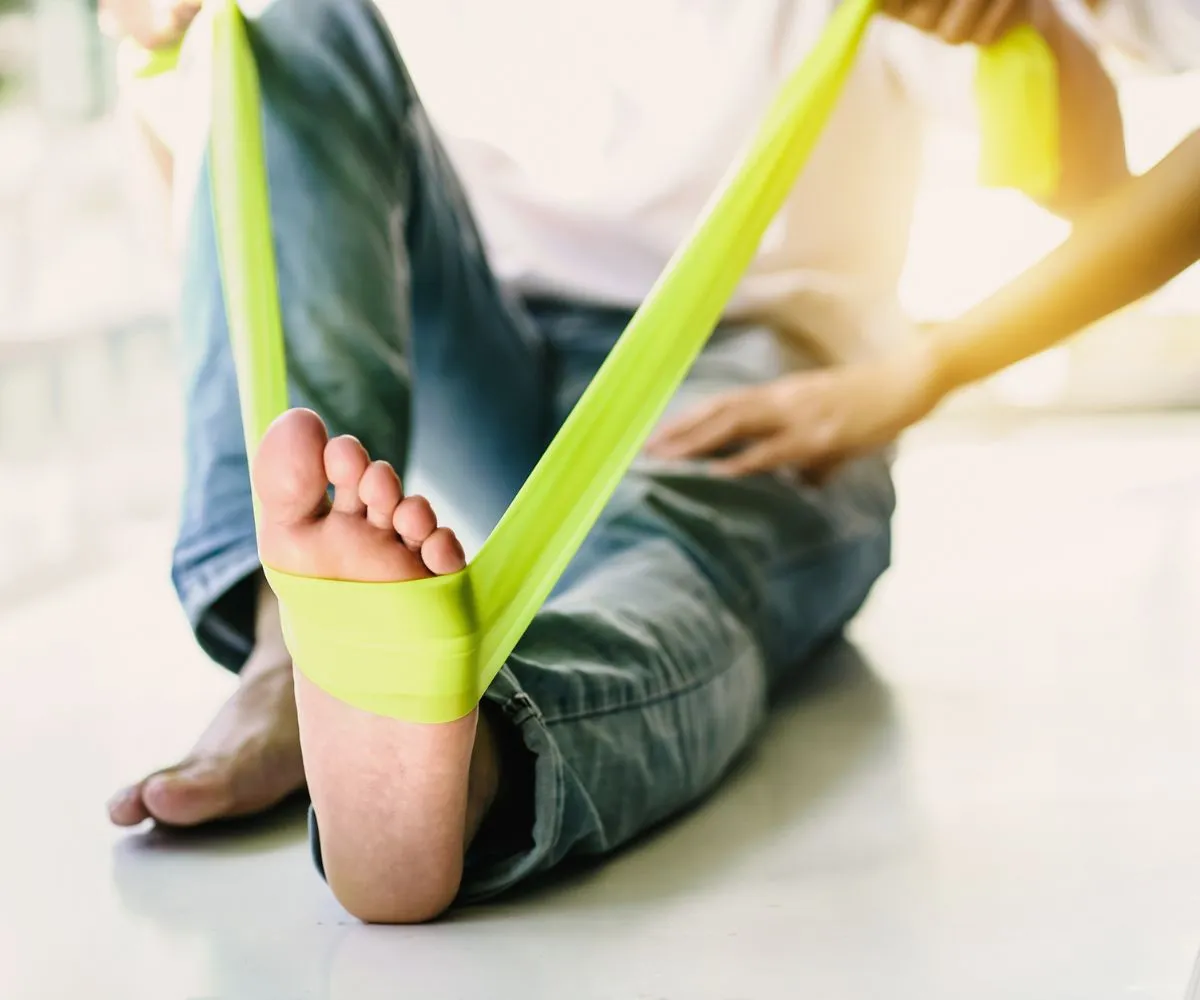
Flex AFO
A lightweight ankle-foot orthosis that holds your foot up as you step, so your toes clear the ground instead of catching.
Lightweight support for safer, steadier steps
FDA listed. Ask your therapist whether an AFO is right for you.
Explore the Flex AFO →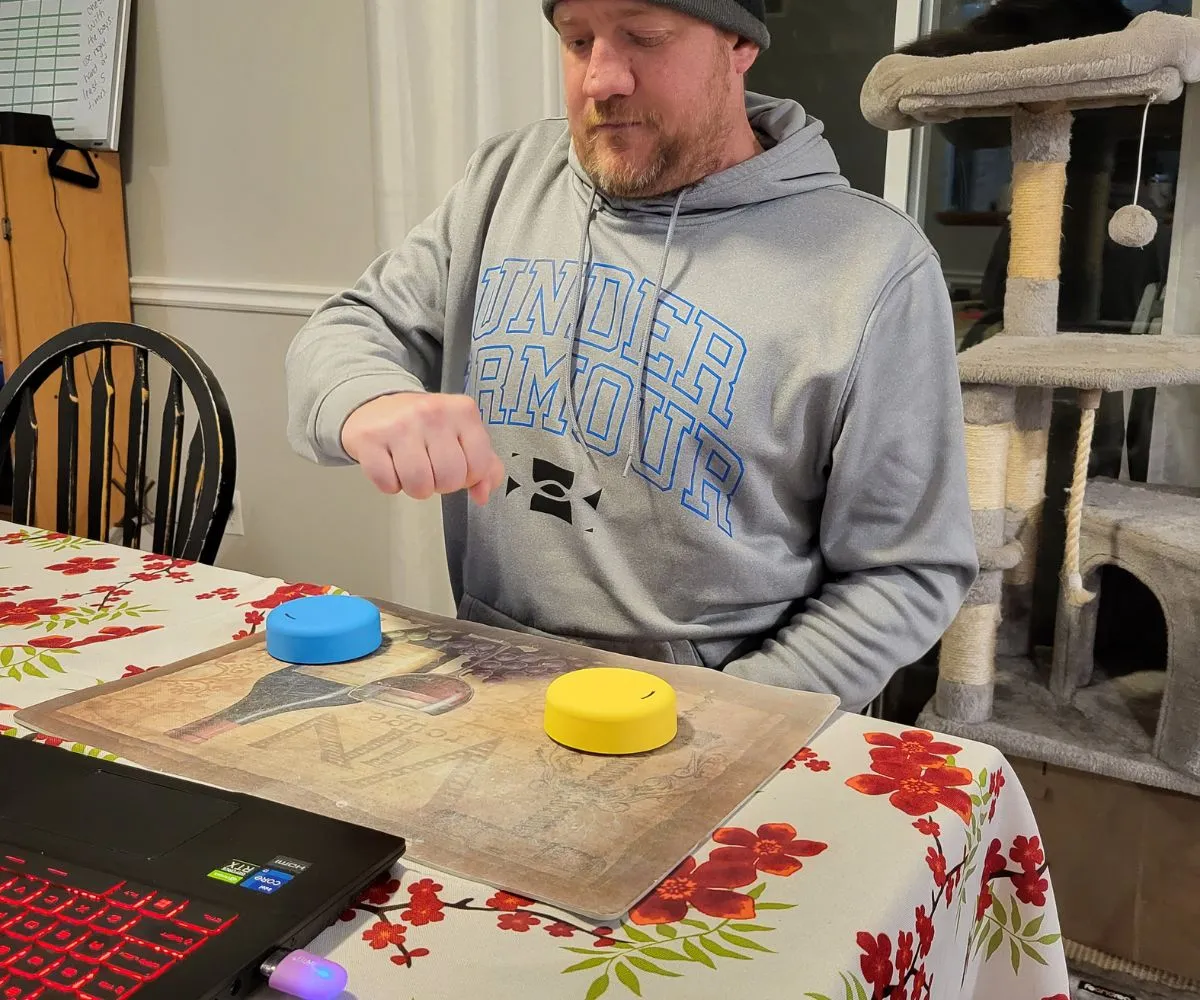
FitMi
Two touch-sensitive pucks and a guided exercise app with ankle, leg, and core exercises. It counts every repetition and adjusts as you improve.
Nearly 3× faster recovery than traditional therapy alone
Measured in arm function (Upper Extremity Fugl–Meyer) in a small trial of people with subacute stroke. Leg results were not studied separately.
Explore FitMi →
1-on-1 Remote Neuro Recovery Program
A licensed neuro therapist builds a home program around your goals, checks in with you live each month, and helps you adjust your exercises and brace as you progress.
Get 1-on-1 recovery guidance without leaving home
Ongoing support between and after clinic visits.
See the program →Foot drop videos from our team
Press play and follow along at home. Keep a sturdy chair or counter nearby for anything done standing.
Leg exercises with physical therapist Liliana, DPT
Seated and standing leg exercises that build strength and control for walking, including ankle movements for foot drop.
Read the written foot drop exercises →How to set up the Flex AFO brace for foot drop
A step-by-step walkthrough of putting on and adjusting the Flex AFO so it holds your foot up as you walk.
A therapist's guide to AFO braces →Foot drop articles: treatment, braces & walking
Plain-English guides from our therapists, organized by what you're trying to figure out.
Foot drop treatment & recovery
There's more than one way to treat foot drop, and the right mix depends on the cause. Each guide explains how a treatment works, who it tends to help, and what to ask your care team.
Understanding foot drop
What foot drop looks like, why it happens, and the signs that it's starting to improve.
AFO braces & shoes
A brace keeps your toes from catching while you recover. The right shoes make it easier to wear one all day.
Electrical stimulation for foot drop
Small electrical pulses can activate the muscles that lift your foot. Learn the options and who they tend to help.
Natural & non-surgical treatment
Most people start with treatments that don't involve surgery. Here's what's involved and how to build them into your day.
Stiffness, curled toes & nerve pain
Foot drop often comes with tight calves, curling toes, or nerve pain. Treating these can make walking more comfortable.
Walking & balance
Lifting your foot is one part of walking well. Balance, leg strength, and practice on real-world surfaces matter too.
Foot drop exercises to do at home
10 foot drop exercises for home →Ankle exercises work on two things: waking up the muscles that lift your foot, and stretching the calf so it doesn't pull your foot down. Short sessions every day do more than one long session a week.
If you can't lift your foot at all yet, start with passive or assisted movements, where your hands or a towel help the motion. Check with your therapist before starting something new, and practice standing exercises near a counter or sturdy chair.
Foot drop by condition
The cause of foot drop shapes how it's treated and what recovery looks like. Find your condition for guides written with it in mind.
When foot drop is an emergency
Foot drop that comes on suddenly can be a sign of a stroke or a serious spine problem. Call 911 or go to the emergency room if foot drop appears with any of these.
Face drooping, arm weakness, slurred speech, sudden trouble seeing, or loss of balance. Note the time symptoms started.
Weakness in both legs, or weakness that gets worse over hours or moves up the leg.
Severe back pain with numbness in the groin or inner thighs, or new trouble controlling your bladder or bowels.
Foot drop that starts after a fall, car accident, head injury, or blow to the knee or leg.
See a doctor soon if
Foot drop develops slowly over days or weeks, you have tingling or numbness on the top of your foot or the outside of your shin, or it started after knee or hip surgery, a new cast, or long periods of sitting cross-legged. Finding the cause early gives you the best chance of recovery.
Lowering your risk of falls
A dragging foot is one of the most common reasons people trip. Clear rugs and cords from walkways, add night lights, wear supportive shoes with a closed back, and use your brace or walking aid as your therapist recommends.
Common questions about foot drop
What is foot drop?
Foot drop (also called drop foot) is difficulty lifting the front of your foot and toes. When you walk, your toes may drag or catch on the ground, so you may lift your knee higher, swing your leg out, or slap your foot down to make up for it. Early signs of foot drop →
What causes foot drop?
Foot drop is a sign of a problem with the brain, spinal cord, nerves, or muscles that lift the front of the foot. Common causes include stroke, brain injury, spinal cord injury, multiple sclerosis, a pinched nerve in the lower back (L4–L5), and injury or pressure on the peroneal nerve near the knee. See all causes →
Can foot drop be cured?
It depends on the cause. Many people regain some or all of their ability to lift the foot, especially when the nerve or brain pathways can recover. Most people try non-surgical treatment like exercise, bracing, and electrical stimulation first. Can foot drop be cured without surgery? →
How long does foot drop take to heal?
There's no single timeline. Foot drop from a compressed nerve may improve within weeks to months once the pressure is removed. After stroke or brain injury, improvement can continue for months and years with regular practice. Signs of healing foot drop →
Is foot drop permanent?
Not always. Some people recover fully, some partially, and some keep needing a brace. Even when foot drop lasts, targeted exercise and the right support can make walking safer and easier. How to fix foot drop →
Do I need an AFO brace for foot drop?
An ankle-foot orthosis (AFO) holds your foot up as you step so your toes don't catch, which lowers your risk of tripping. Many people use one while they work on recovery. Your therapist can help you decide which type fits your needs. A therapist's guide to AFO braces →
Can exercise help foot drop?
Yes. When foot drop comes from a brain or spinal cord injury, repeating ankle and leg movements helps the nervous system rebuild control. Exercise also keeps the calf from getting tight and the ankle from getting stiff. 10 foot drop exercises for home →
Does electrical stimulation help foot drop?
Functional electrical stimulation (FES) uses small electrical pulses to activate the muscles that lift your foot as you walk. It can help some people walk more easily and may support recovery. Ask your therapist whether it's a good fit for you. FES devices for foot drop →
Questions about foot drop? We're here to help.
Whether you're choosing a brace, building a home exercise routine, or supporting a loved one, you can talk to a real person on our team, Monday through Friday.