
Stroke Recovery: Guides, Exercises & Support for Survivors and Caregivers
Free resources and eBooks, therapist-written articles, and tools for every stage of recovery all in one place. Start wherever you are today and if you have questions send us an email at [email protected]
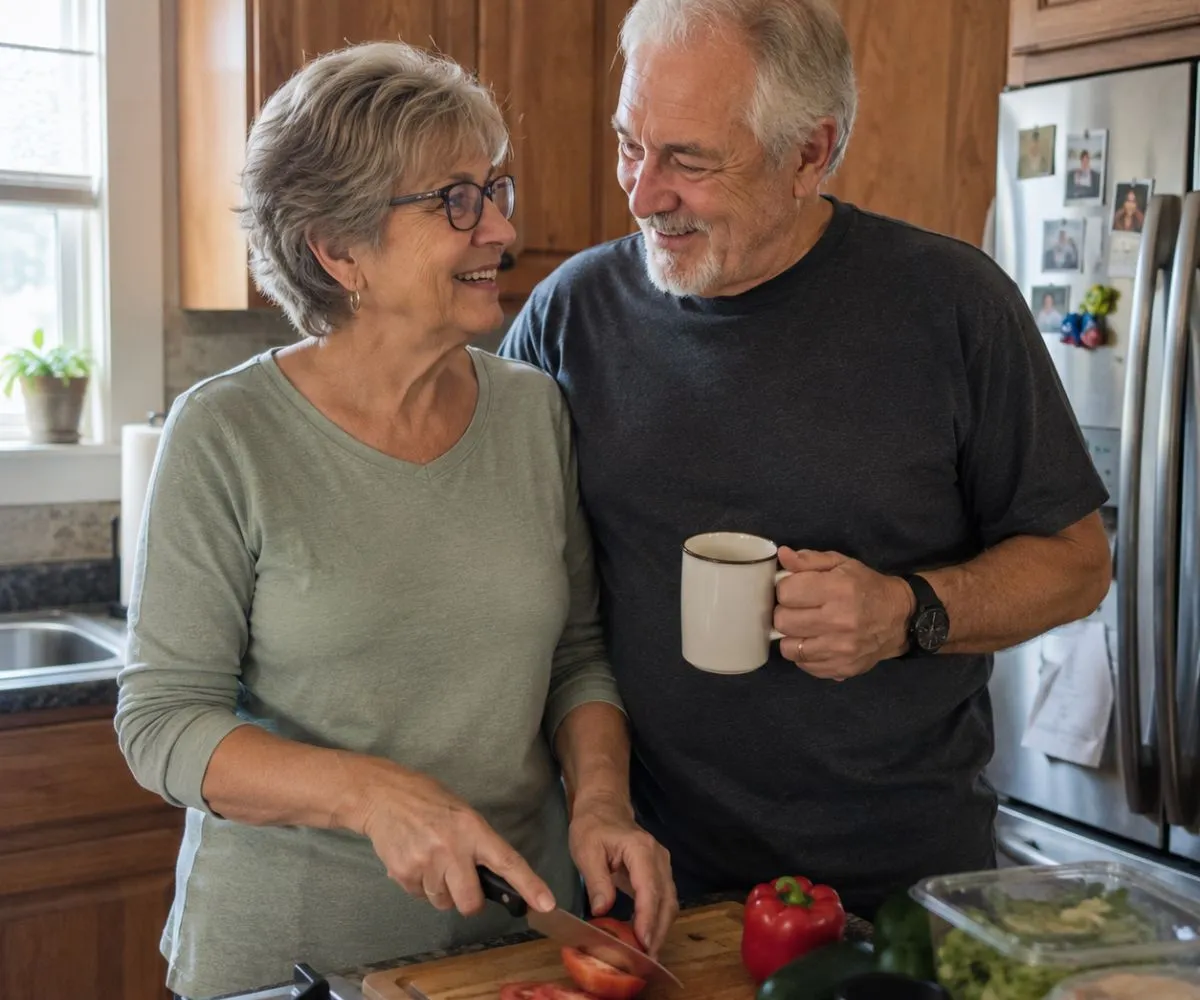
Stroke recovery is possible, and it can continue for years
A stroke happens when blood flow to part of the brain is blocked (an ischemic stroke) or a blood vessel in the brain bursts (a hemorrhagic stroke). Without oxygen, brain cells in that area are damaged. That's why the effects of a stroke depend so much on where it happened: one person may have trouble moving their arm, while another struggles with speech, memory, vision, or balance.
The good news is that the brain can adapt. Through a process called neuroplasticity, healthy areas of the brain can learn to take over functions that were lost. That rewiring is driven by repetition: practicing a movement or skill again and again tells the brain it matters.
Most people see their fastest improvement in the first three to six months. After that, progress usually slows, but it doesn't stop. Many survivors keep making meaningful gains years after their stroke, especially when they keep practicing at home between therapy sessions.
This page brings together everything we've written to help you through that process: free guides you can print, articles on specific symptoms, exercises for every ability level, and real stories from survivors who've been where you are.
Recommended readingNeuroplasticity after stroke: how the brain rewires itselfFree stroke recovery eBooks to download and print
Step-by-step exercise guides and practical advice for survivors and the people who care for them. Every eBook is free.
For survivors
Illustrated, step-by-step exercise guides you can print and keep by your chair. Each one starts with gentle options and builds up as you get stronger.
- 35 Hand Rehab Exercises for Stroke PatientsGet eBook →
- 20 Therapist Approved Stroke Rehab Exercises for HomeGet eBook →
- 30 Cognitive Exercises You Can Do At HomeGet eBook →
- 15 Effective Speech Therapy Exercises for HomeGet eBook →
- 24 Exercises to Help You Regain Your BalanceGet eBook →
- 12 Proven Exercises + Treatment for Foot DropGet eBook →
- 15 Stroke Recovery Tips for Every SurvivorGet eBook →
For caregivers
Caring for someone after a stroke is a big change. These guides help you ask the right questions, communicate more easily, and look after yourself along the way.
Stroke recovery tools for rehab at home
Recovery takes repetition. Our FDA-listed devices and programs make home practice engaging enough to keep doing — used in 400+ rehab hospitals.
Research suggests recovery depends on doing many repetitions of meaningful movements, often hundreds a day. That's hard to manage with a sheet of exercises and no feedback. It gets boring, and it's easy to lose track of whether you're improving.
Our tools turn those repetitions into games that track your progress, so practice feels less like a chore. They're designed to work alongside your therapist, not replace them. If you're not sure which fits, call (800) 593-5468 and talk it through with a real person, Mon–Fri.
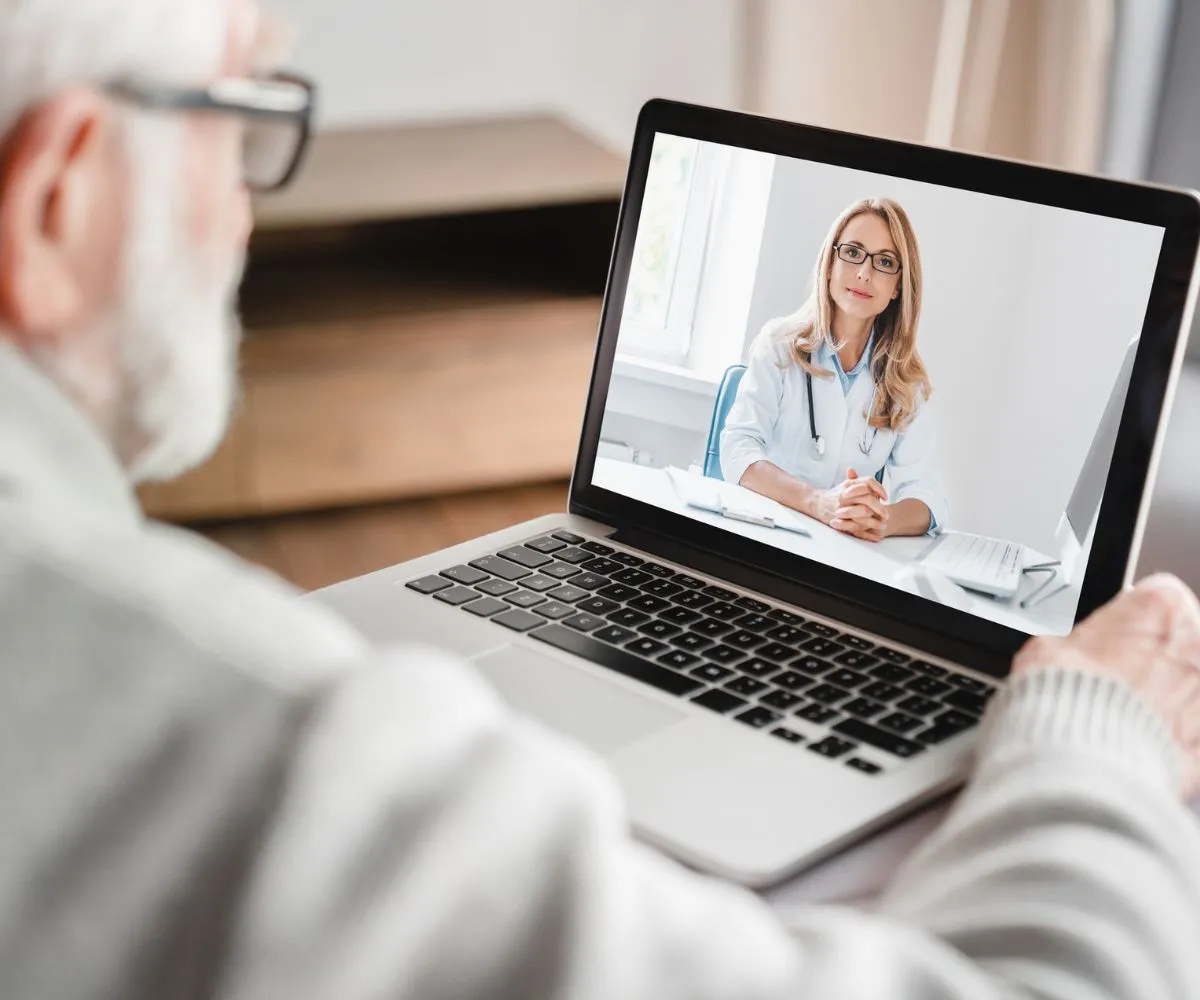
1-on-1 Remote Neuro Recovery Program
A licensed neuro therapist builds a home program around your goals, checks in with you live each month, and shares resources matched to your needs.
Get 1-on-1 recovery guidance without leaving homeOngoing support between and after clinic visits.See the program →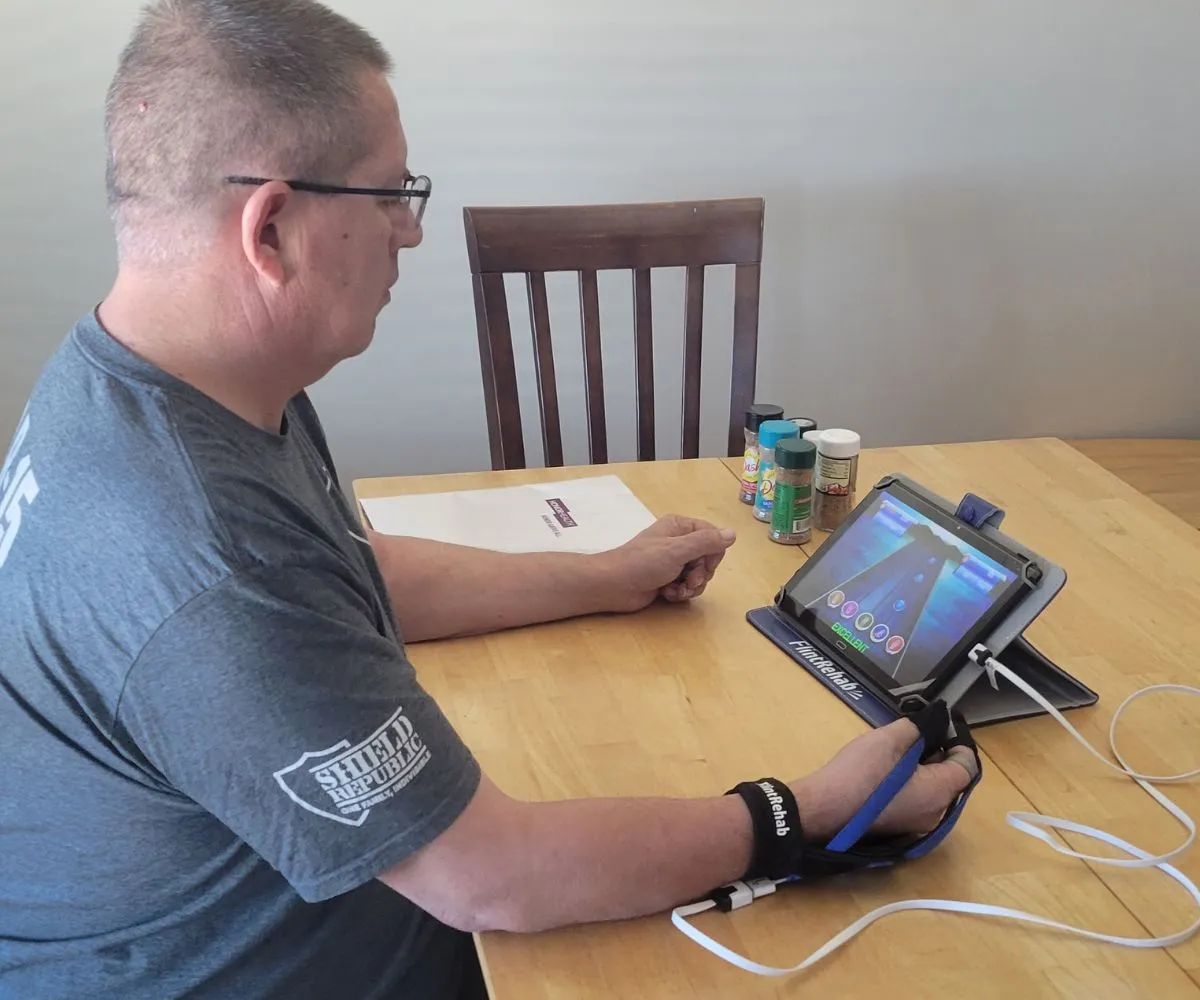
MusicGlove
A hand-therapy glove you play like a music game. Each note prompts a grip or pinch, so you practice hundreds of hand movements per session.
Increase hand function in under 2 weeksWith about six hours of total use. See the evidence, including what didn’t change.Explore MusicGlove →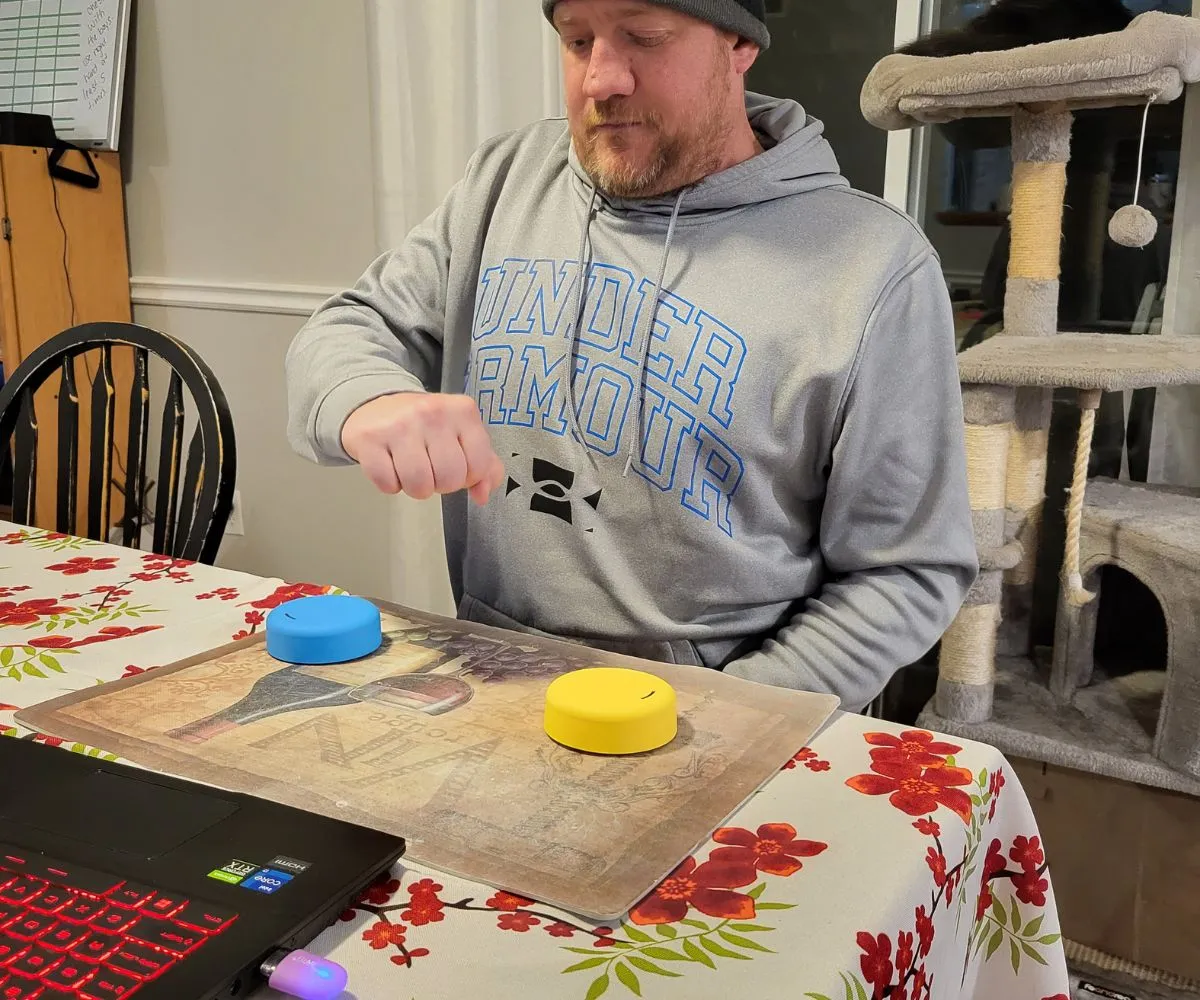
FitMi
Two touch-sensitive pucks and a guided exercise app for your hands, arms, core, and legs. It tracks every repetition and adjusts as you improve.
Nearly 3× faster recovery than traditional therapy aloneUpper Extremity Fugl–Meyer, 8.0 vs. 3.0 points vs. conventional home exercise; subacute stroke, n = 27 RCT.Explore FitMi →Stroke recovery articles: symptoms, exercises & stories
Plain-English guides from our therapists, organized by what you're working on.
Stroke symptoms & challenges
Every stroke is different, and many of its effects are invisible to other people. Find the challenge you're living with below. Each guide explains what's happening in the brain, what usually helps, and when to talk to your care team.
Movement and paralysis after stroke
Weakness or paralysis on one side of the body is one of the most common effects. Repetitive practice helps the brain rebuild control.
Hand and arm recovery after stroke
Hand and arm movement often takes the longest to return. Small, frequent exercises can make a real difference over time.
Walking and balance after stroke
Many survivors relearn to walk with therapy. Strength, balance training, and fall prevention help you move with confidence.
Speech and swallowing after stroke
Aphasia affects how you speak and understand language. Swallowing problems are also common and should be checked early.
Memory and thinking after stroke
Memory, attention, and problem-solving can be affected. Like movement, these skills improve with regular practice.
Emotional changes after stroke
Depression, anxiety, and mood changes are common and treatable. They're a result of the stroke, not a personal failing.
Vision problems after stroke
A stroke can cause vision loss on one side or trouble noticing one side of space. Specific exercises and strategies help.
Spasticity and pain after stroke
Muscle tightness and nerve pain can make movement harder. Stretching, positioning, and treatment can ease them.
Fatigue and sleep after stroke
Post-stroke fatigue is real and often underestimated. Pacing your day and improving sleep help you get more from rehab.
Stroke exercises to do at home
21 stroke exercises to improve mobility →What you do between therapy sessions matters as much as the sessions themselves. A short daily routine, done consistently, gives your brain the repetition it needs to rebuild connections. Start with exercises that feel slightly challenging but safe, and focus on quality of movement over speed.
If you have little or no movement on one side, you can still begin. Passive range-of-motion exercises and mental practice (imagining the movement) both help prepare the brain. Always check with your therapist before starting a new program, and stop if you feel pain.
- Home exercise program for stroke
- Arm exercises to improve movement
- Hand exercises to improve function
- Finger exercises to improve dexterity
- Shoulder exercises to improve mobility
- Leg exercises to improve strength
- Balance exercises for stroke patients
- Core exercises to improve stability
- Gait training to improve walking
- Passive range of motion exercises
- Exercises for stroke patients with paralysis
- Brain exercises for stroke recovery
Stroke recovery stories
More survivor stories →Progress rarely follows a straight line. These survivors hit plateaus, heard discouraging predictions, and kept going anyway. Their stories are a reminder that improvement is still possible months and even years after a stroke.
Signs of a stroke: remember BE FAST
Stroke symptoms come on suddenly. The sooner someone gets emergency care, the more of the brain can be saved.
Sudden dizziness, loss of balance, or trouble walking.
Sudden blurred, double, or lost vision in one or both eyes.
One side of the face droops. Ask them to smile.
One arm is weak or numb. Ask them to raise both arms.
Slurred or strange speech, or trouble understanding.
Call 911 right away. Every minute counts.
Call even if the symptoms go away — it could be a mini stroke (TIA), a warning sign of a larger stroke. Note the time symptoms started and tell the paramedics.
While you wait for help
Stay with the person and keep them calm. If they're drowsy, lay them on their side. Don't give them food, drink, or medication, including aspirin, since some strokes are caused by bleeding. Don't drive them to the hospital yourself; paramedics can start care on the way.
If you've already had a stroke
Your risk of another stroke is higher, especially in the first year. Managing blood pressure, taking medications as prescribed, staying active, and not smoking all lower that risk. Make sure the people around you know BE FAST, too.
Common questions about stroke recovery
How long does stroke recovery take?
The fastest gains usually come in the first three to six months, but many survivors keep improving for years. See the stroke recovery timeline →
Can the brain heal after a stroke?
Yes. Through neuroplasticity, healthy areas of the brain can take over lost functions, driven by repetition. How neuroplasticity after stroke works →
Is a full recovery from stroke possible?
Some people regain most or all function, especially after a mild stroke. It depends on the stroke and how much rehab you do. Is full recovery from stroke possible? →
Can I do stroke rehab at home?
Yes. Home practice between therapy sessions is one of the biggest drivers of progress. Build a home exercise program for stroke →
How can I lower my risk of another stroke?
Manage blood pressure, take medications as prescribed, stay active, and avoid smoking. How to prevent a second stroke →
How can I help someone after a stroke?
Encourage independence, learn about their specific challenges, and look after your own health too. How to help someone who had a stroke →
Questions about stroke recovery? We're here to help.
Whether you're figuring out where to start, choosing a device, or supporting a loved one, you can talk to a real person on our team, Monday through Friday.
Stroke recovery advice from licensed therapists, every Tuesday morning
Join more than 150,000 survivors, caregivers, and clinicians who get practical exercises, plain-English research, and free resources in one short email a week.