

The short answer
The best physical therapy for a stroke patient at home is daily, repeated practice of movements that matter to you. Add proven methods like mirror therapy and mental practice. Use tools that keep you motivated. Then ask your therapist to help you match each method to your stroke and specific condition.
After a stroke you go through some amount of inpatient/outpatient therapy but after those visits end your brain can continue to recover and learn. In fact, consistent home therapy is absolutely crucial for home maximizing recovery and returning to normal activities.
Now there are many different ways to approach physical therapy for stroke patients at home but a big question is how do you know which methods are the best for you?
Well since every stroke is different, different people will respond best to different methods. But there are some constants that can help anyone including different habits, overarching themes, and tactics to help you stay consistent.
In this guide we will look at a few different recommendations to try in your stroke home therapy. We will also cover some simple guidelines and tips to help you continue to move forward with your home stroke routine and maximize recovery over the long run.
Let’s dive in!
Jump to a section
- Why Home Physical Therapy Matters for Stroke Patients
- Best Physical Therapy Methods for Stroke Patients to Try at Home
- Habits and Tips to Boost Physical Therapy for Stroke Patients at Home
- 6. Boost Your Mindset with Kaizen
- 7. Stay Moving
- 8. Turn the Background Noise OFF to Turn Your Brain ON
- 9. Keep Moving Through a Plateau
- 10. Focus on Fueling Your Body
- 11. Treat the Root Cause of Spasticity
- 12. Don’t Neglect Your Hand Rehabilitation
- 13. Get More than 6 Hours of Sleep
- 14. Take Advantage of Our Free Stroke Therapy Videos on YouTube and Free Webinars
- 15. Use Free Online Resources to Keep Learning
- Frequently Asked Questions About Home Recovery After Stroke
- Additional Resources
Why Home Physical Therapy Matters for Stroke Patients
Your brain relearns through repetition. Each time you practice a movement you strengthen the connections that control it and a few therapy sessions each week don’t give you enough practice to do that well.
Researchers watched 312 stroke therapy sessions and in a typical session people did about 32 arm movement repetitions. The researchers said that’s far less than animal studies suggest the brain needs to rewire itself.
That’s where home therapy comes in. It fills the gap between appointments, so your brain keeps working even when you’re not in the clinic. It also helps when formal therapy winds down as many people see their visits shrink or end while they still have recovery to make.
Need proof? A review of 49 clinical trials found that home-based rehab moderately improved physical function after stroke and people who trained with a caregiver’s help improved even more. Another review of eight trials found that home exercises worked about as well as clinic exercises for arm recovery.
The type of practice matters too. A Cochrane review of 33 studies looked at repeating everyday tasks, like standing up from a chair and it found small improvements in arm function, hand function, and walking distance. Those gains lasted up to six months after training.
Home is a great place to practice these tasks. You can stand up from your own chair, reach into your own cupboard, or walk down your own hallway and those skills carry over to daily life because you built them where you use them.
As small wins add up you’ll feel more in control of your recovery and that confidence helps you push through hard days. Now let’s look at some of the best therapy methods for stroke patients at home including habit and tip suggestions plus specific rehab tactics you might not have considered!
Best Physical Therapy Methods for Stroke Patients to Try at Home
After discharge from outpatient therapy it’s essential for stroke patients to continue a strong recovery program at home that keeps your brain stimulated. Your brain needs that steady input to keep healing and to improve muscle function.
We will start by explaining the top 5 stroke recovery treatment options you can do at home. These methods focus specifically on mobility and strengthening and they are the core of any stroke recovery treatment plan you can do at home.
After that, you’ll learn more tips for home therapy after stroke to help maximize recovery.
As always, remember to check with your physical therapist or a trusted healthcare professional to make sure the recommendations or suggestions are appropriate for your particular circumstances.
1. Daily Stroke Rehabilitation Exercises
While generic exercise focuses on strengthening your muscles, stroke recovery exercise activates your brain to deliver messages to the muscles for movement. Rehabilitation focuses on activating neuroplasticity, the mechanism the brain uses to rewire itself and learn new skills.
After a portion of the brain has been affected by stroke, neuroplasticity develops new pathways to healthy areas of the brain. By practicing rehab exercises at home on a consistent and daily schedule, you feed the brain the stimulation it needs to rewire itself and improve function.
Depending on the area of the brain affected, stroke survivors often experience weakness or paralysis of one side of the body. This is known as hemiparesis or hemiplegia. This manifests as extreme weakness of an arm or leg or both, and can lead to significant muscle atrophy.
Thankfully, consistent performance of leg exercises or arm exercises as part of a home therapy regimen can help stroke patients boost their recovery. Strengthening the muscles is also a goal during stroke rehabilitation to help combat the muscle atrophy that has occurred from nonuse.
2. Try Mirror Therapy for Recovery
Mirror therapy is one effective method to activate the signals from the hand to the brain, especially for those with hand paralysis or extremely limited hand movement. This technique can also help manage post-stroke pain and reduce hemineglect, or neglect of one side of the body after stroke.
This therapy method for stroke survivors involves using a tabletop mirror to cover the affected arm with the reflection of the functioning arm. Then, you perform tabletop hand therapy exercises while looking at the reflection.
Although you know you’re only moving one hand, mirror therapy tricks the brain into thinking you’re moving both hands. This helps activate neuroplasticity and slowly improve mobility in the affected hand.
3. Build Strength with CIMT for Arm or Leg Paralysis
Constraint-induced movement therapy (CIMT) is a challenging form of physical therapy that is helpful for stroke patients with hemiplegia or hemiparesis. It works by restricting movement of the unaffected side while forcing use of the affected side.
CIMT is most often a rehabilitation technique that is initiated in rehab and then continued at home. This technique can be challenging and, at times, frustrating since movements with the affected limb may feel clumsy or inefficient. However, this can be an excellent therapy method for patients to continue at home as they recover from hemiparesis or hemiplegia.
4. Add Mental Practice to Improve Paralysis
Mental practice involves mentally rehearsing something before you actually do it. Professional athletes are known to implement mental practice to improve their sport, and stroke survivors can also benefit from this technique.
Try mentally practicing your rehab exercises for 5 minutes before you practice them in real life. Studies have shown that visualizing yourself moving helps activate neuroplasticity the same way that physically moving does.
Mental practice is especially helpful for patients who are affected by paralysis and cannot move without assistance yet. It provides a way to help the brain rewire itself without requiring movement. This technique can also be combined with passive rehab exercises where someone is moving your affected limb for you.
5. Home Rehabilitation Tools
At-home physical therapy tools can help you stay motivated during stroke recovery at home, especially if you’ve grown tired of following along with written sheets of exercises. A tool that turns practice into a game can help you stay motivated and do more repetitions. Ask your therapists if they recommend any recovery tools to incorporate into your home therapy after stroke.
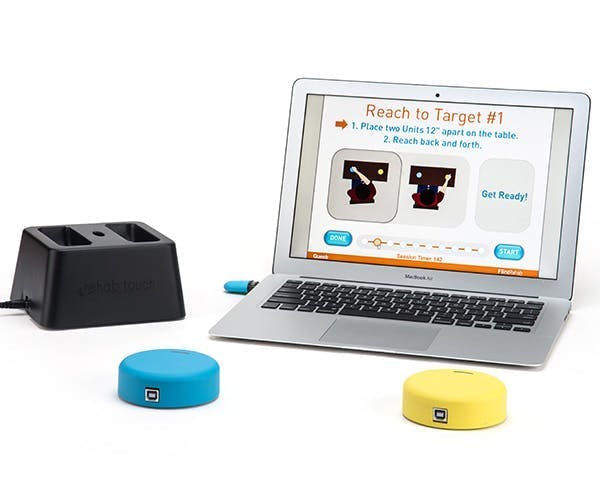
We might be bias (we did create it after all) but many physical and occupational therapists highly recommend Flint Rehab’s FitMi home therapy for stroke survivors as a home exercise program. It guides you through full-body exercises for the arms, legs, and core and it tracks your progress, so you can see how far you have come.
It motivates users to accomplish high repetition of standard rehab exercises needed to drive neuroplasticity and promote recovery.
FitMi won awards from the American Occupational Therapy Association for “Best in Show.” Also, Bob & Brad (two physical therapists on YouTube with over 4 million subscribers) gave FitMi their stamp of approval.
See what these popular physical therapists said about FitMi in this video:
 Full bodyFitMiTwo touch-sensitive pucks and a guided exercise app for your hands, arms, core, and legs. It counts every rep and adjusts as you improve.Nearly 3× faster recovery than traditional home therapy aloneExplore FitMi
Habits and Tips to Boost Physical Therapy for Stroke Patients at Home
Now that we have reviewed the top home therapy treatments, it’s time to focus on additional healthy habits to maximize your recovery. Consistency is the key to recovery and knowing the best steps for physical therapy is much different than taking them.
When stroke patients are creating their home therapy regimen it is important to establish a routine that improves the chances of staying consistent. To help you with this, here are some basic habits and tips you can use to implement your best physical therapy regimen at home:
6. Boost Your Mindset with Kaizen
Kaizen is the Japanese practice of continuous improvement through small, consistent steps. While this may sound too simple to work, the simplicity of this practice is actually the hardest part.
Kaizen involves patience and persistence, two essential ingredients for physical therapy after stroke. Recovery after stroke is a lengthy process and you can’t achieve your results all at once. The brain can only do so much in a single day.
The best thing you can do to achieve results is take it one step at a time, day after day. This slow yet steady pace is exactly what will lead to your highest recovery possible. Even if you do experience a stall in your progress, keep focusing on taking small steps toward recovery.
7. Stay Moving
Most physical therapists have one main goal for physical therapy for stroke patients at home: to keep moving. All movement is beneficial during stroke recovery, even if the movement feels slow or inefficient at first. Try your best to engage in therapeutic movement daily.
One determining factor of a successful recovery is how consistently stroke patients pursue rehabilitation long-term. One study found that after a stroke, patients were at the same level of recovery 5 years post-stroke as they were just 2 months post-stroke. The study linked a lack of long-term rehab as the cause for stagnation. This is why small, consistent steps taken long-term provide the best results.
Additionally, stroke patients often experience a decline in cardiovascular health following their stroke. Finding ways to engage in daily movement and aerobic exercise can help ward off further cardiovascular complications and may even improve neuroplasticity.
8. Turn the Background Noise OFF to Turn Your Brain ON
When attention is divided between physical therapy and the television playing in the background, you may not be reaping the full benefits of physical therapy at home after stroke.
Especially in the early stages of stroke recovery, survivors may notice they are more sensitive to sounds or distraction. As your brain is recovering from injury, excess sound may lead to auditory overload.
To help combat this, create a quiet, distraction-free environment to maintain your concentration for exercise. Turn off the television and tell family members not to disturb you during this time. Your brain is hard at work rewiring itself. Don’t let excess noise or distraction get in the way.
9. Keep Moving Through a Plateau
Every stroke is different so everyone will recover at a different pace. Many survivors experience periods where their stroke recovery seems to slow or even regress. In fact, there is a well-documented phenomenon called the stroke recovery plateau where results often slow down at the 3-month mark.
Setbacks like this are normal and to be expected during the recovery process. Don’t let it stop you from continuing with physical therapy at home after your stroke. Although results may take longer to occur, recovery will not stop unless you stop.
When you stick with a consistent home therapy regimen, the brain will respond and healing will continue. Creating a daily schedule for your exercises can help you stay on track. Additionally, you can ask a family member or friend to help you stay accountable.
10. Focus on Fueling Your Body
By now you know that physical therapy is a main focus for stroke patients at home. However, it is also important to think about how you are fueling your body as you stay consistent with your home exercises.
Proper hydration and a healthy diet play a huge role in recovery from any illness or injury, including stroke. Viewing your nutrition as an important adjunct to your home therapy after stroke is a crucial piece of the recovery puzzle. Optimal nutrition can lower your cardiovascular risk, which means lowering your risk of another stroke.
Maintaining a healthy diet during stroke recovery can also boost neuroplasticity by providing the nutrients your brain needs to make new neural connections. If you have difficulty swallowing after stroke, a speech therapist can help you with strategies and exercises to improve your ability to eat safely.
11. Treat the Root Cause of Spasticity
Stretching is great for spasticity, but this is not the only way to address this common secondary effect of stroke. In fact, accompanying your stretches with daily rehab exercise is even more beneficial.
Spasticity is the result of miscommunication between the brain and body. When the brain cannot send signals that tell the muscles when to move or relax, the muscles tighten up to protect themselves.
Stretching is helpful because it prevents contractures. However, this does not address the root cause of the spasticity. Rewiring the brain treats the root issue. Therefore, your daily at-home exercise helps improve mobility and reduce spasticity long-term.
Additionally, there are other treatments for spasticity after stroke such as splinting or bracing, electrical stimulation, and Botox. Talk to your doctor and rehab team about what treatments will be best for your specific needs.
Learn more in our recent webinar Understanding spasticity and why your muscles feel tight after stroke — plus what can help.
12. Don’t Neglect Your Hand Rehabilitation
Hand function often takes longer to recover than arm or leg movement. As a result, many stroke survivors neglect hand therapy and instead find compensation strategies to use their non-affected hand for everyday tasks, like cooking one-handed. This leads to learned nonuse which results in the affected hand getting worse
The presence of spasticity can also greatly affect the hand, leading to a clenched hand and curled fingers after stroke.
To improve hand function after stroke, patients must keep the hand active. Focus on using the affected hand during daily tasks, even if the stronger hand assists with the movement. Most importantly, be sure to complete daily hand therapy exercises to help rewire the brain to improve the likelihood of regaining hand function.
Here are some simple ways to do just that:
- Use it every day. Let your affected hand help with daily tasks, even if the stronger hand assists.
- Practice on purpose. Do your hand therapy exercises daily.
- Make it fun. A hand tool like MusicGlove turns finger exercises into a music game, which can make daily practice easier to keep up.
Ultimately, better hand function makes a big difference over time in continuing to regain your independence so remember to pay special attention and don’t neglect your hand rehab.
 Hand & fingersMusicGloveA hand therapy glove you play like a music game. Each note cues a grip or pinch, so you practice hundreds of hand movements per session.Increase hand function in under 2 weeks with about 6 hours of total use.Explore MusicGlove
13. Get More than 6 Hours of Sleep
Sleep plays a crucial role during stroke recovery, especially when it comes to physical therapy. This is because REM sleep has been shown to help people learn and remember how to perform physical tasks.
During REM sleep, the brain has an opportunity to replenish the neurotransmitters that organize neural networks for remembering, learning, and performance. Therefore, it’s important for stroke survivors to get ample rest and to practice good sleep habits. This can help combat the excessive sleepiness after stroke that many survivors experience.
REM sleep (rapid eye movement sleep) usually occurs towards the end of the night, so it’s important to allow yourself to sleep longer than 6 hours each night. If you sleep more than 30 minutes at a time during the day, this might interrupt your nighttime deep sleep. When your mind and body are at rest, healing can occur.
Sleep disorders are common after stroke and can be a roadblock during recovery. If you have any sleep disorders that prevent you from sleeping longer than 6 hours, talk to your doctor to discuss your options.
14. Take Advantage of Our Free Stroke Therapy Videos on YouTube and Free Webinars
You do not need to pay for every resource and our free videos can add variety to your home practice and show you how a movement looks.
The Flint Rehab YouTube channel has free videos you can follow along with at home. Here is how to get the most from them:
- Watch first, then practice. Preview a video before you try it, so you know what to expect.
- Work at your pace. Pause, rewind, and repeat parts as often as you need.
- Set up safely. Sit in a sturdy chair, clear your space, and have someone nearby if you feel unsteady.
- Check with your therapist. Ask which videos match your abilities and goals.
Remember though, videos work best as a supplement and they do not replace a plan from your therapy team or 1 on 1 remote recovery guidance.
To learn more about our free webinars, you can check out past topics and sign up for future notifications here.
15. Use Free Online Resources to Keep Learning
You can also build your know-how at no cost both as a survivor or a caregiver. Reading about recovery helps you understand what your brain and body are doing. It can also give you new ideas for yourself or a loved one when the home routine starts feeling stale.
Here are two free places to start:
- The Flint Rehab blog. Our learn section has articles on stroke, brain injury, and spinal cord injury. Search for the challenge you face, such as hand movement, walking, or spasticity.
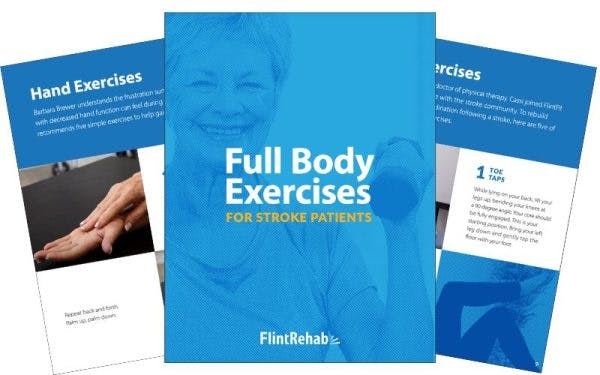
- Free ebooks. Our downloadable rehab ebooks include exercise guides you can print and keep nearby. The stroke rehab exercise ebook is a good first pick.
Bring what you learn to your next therapy visit and ask your therapist which ideas fit your stage of recovery. Good questions help your team tailor your plan.
If your therapy has ended or become limited, feel free to check out our 1 on 1 remote recovery program for additional home guidance.
 1-on-1 therapyRemote Neuro Recovery ProgramA licensed neuro therapist builds a home program around your goals, checks in live each month, and answers your questions along the way. Caregivers are welcome to join.Get 1-on-1 recovery guidance from a licensed therapist without leaving homeSee the program
Frequently Asked Questions About Home Recovery After Stroke
What is the best physical therapy for a stroke patient?
The best therapy is the kind you can repeat often and that targets your own goals. Most plans combine daily recovery exercises, task practice, and methods like mirror therapy. Your therapist can tailor the mix to your stroke.
Can I do stroke therapy at home without a therapist?
You can practice at home, but your therapist should guide the plan. They can check your form, set safe goals, and change your program as you improve. Check in with them regularly.
How often should I do physical therapy at home after a stroke?
Aim for short, daily sessions rather than rare long ones. Consistency matters more than intensity. Ask your therapist how long and how often is right for you.
How long does stroke therapy take to work?
It varies from person to person. Many survivors keep improving long after the first few months when they keep practicing. Progress can be slow, and plateaus are normal.
Your Next Step
Recovery is a marathon, not a sprint. Your brain needs steady practice to build new pathways. Small, daily steps add up over time.
Pick one method from this list to start this week. Then ask your therapist one question: “Which home exercises should I focus on first, and how often?” Their answer gives you a plan built around your stroke and your goals.
We hope you enjoyed this article and subscribe to our newsletter for weekly articles just like this delivered straight to your inbox — subscribe here.
Additional Resources
- Hand Therapy Exercises for Stroke Patients: Get exercises to help your hand move more again.
- Can You Regain Balance After Stroke? Here’s What the Research Says Plus 5 Methods for You to Use: See what research says about balance and 5 ways to work on it.
- Stroke Recovery Plateau: Learn why progress slows and what to do about it.
- Use These 7 Brain Boosting Habits to Help Promote Recovery After Your Stroke: Build daily habits that support your brain.
- Home Exercise Program for Stroke: Set up a full routine you can follow at home.
- Arm Exercises for Stroke Patients: Find arm exercises to add to your daily routine.
- Leg Exercises for Stroke Patients: Build leg strength for standing and walking.
- Mirror Therapy for Stroke: Learn how to set up mirror therapy at home.
- Stroke Recovery Timeline: See what to expect as recovery unfolds over time.
- Foods That Help Stroke Recovery: Discover foods that fuel your brain as it heals.
- Neuroplasticity After Stroke: Understand how your brain rewires itself with practice.